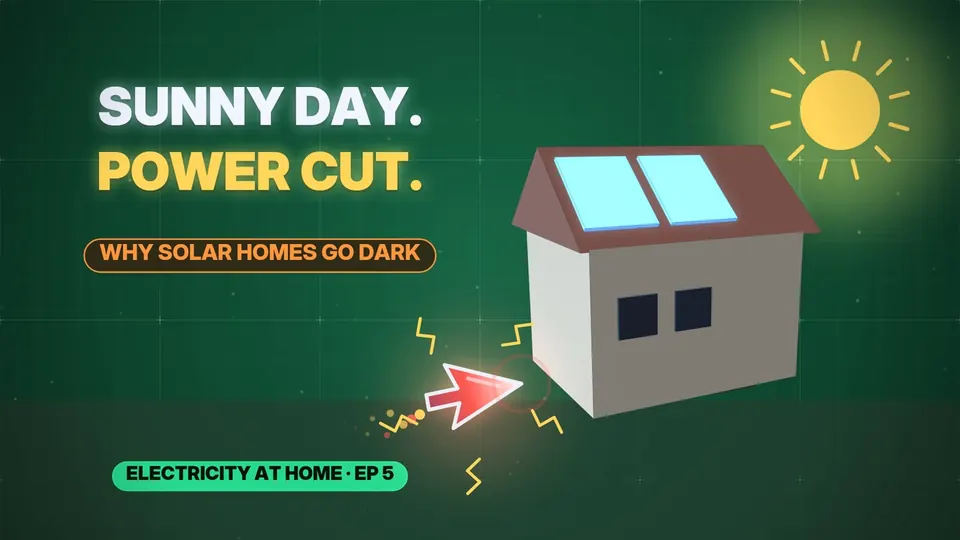
Electricity at Home: from the Power Plant to Your Socket · EPISODE 5 · 2:37
Make Your Own Power — Solar, Batteries and Backup
Your roof could be a tiny power plant — but on a sunny day, during a power cut, most solar homes still go dark! How solar panels make electricity, how much one panel really makes, the inverter, selling power to the grid (net metering), why solar shuts off in a blackout, and how long a home battery lasts. The finale of Electricity at Home, in under 3 minutes.
// CHAPTERS · TAP TO JUMP
// IN THIS EPISODE
What you'll learn
- Solar panels are made of silicon cells: sunlight knocks electrons loose and they flow out as DC.
- A typical home panel makes ≈ 400 W in full sun. The sun moves and clouds pass, so count on ≈ 4–5 hours of full sun a day in sunny places (less in cloudy ones): 400 W × 5 h ≈ 2 kWh a day per panel; 10 panels ≈ 20 kWh.
- Homes run on AC, so an inverter turns the panels' DC into 230 V · 50 Hz (India, UK, Europe) or 120 V · 60 Hz (USA, Canada).
- At noon the extra goes out to the grid and the meter counts it; at night you buy power back. In many places that's net metering — you pay for the difference (rules and prices vary a lot by country).
- In a power cut, a normal grid-tied solar inverter switches OFF, so workers repairing the cables are never hit by power from your roof. No battery = no backup, even in full sun.
- Add a battery + a hybrid inverter and the home can unplug from the grid and keep running. Backup hours ≈ battery kWh ÷ load kW: 5 kWh at 500 W ≈ 10 h; a 2,000 W heater ≈ 2.5 h (a bit less after losses).
// 30-SECOND SHORTS ON THIS
Quick refreshers
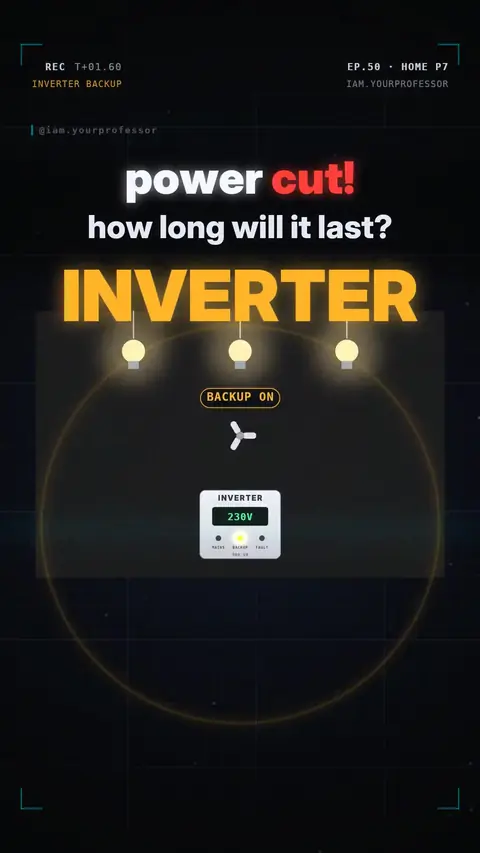 EP.50 · Home Electrical · 7Inverter backup: how long will your battery last?
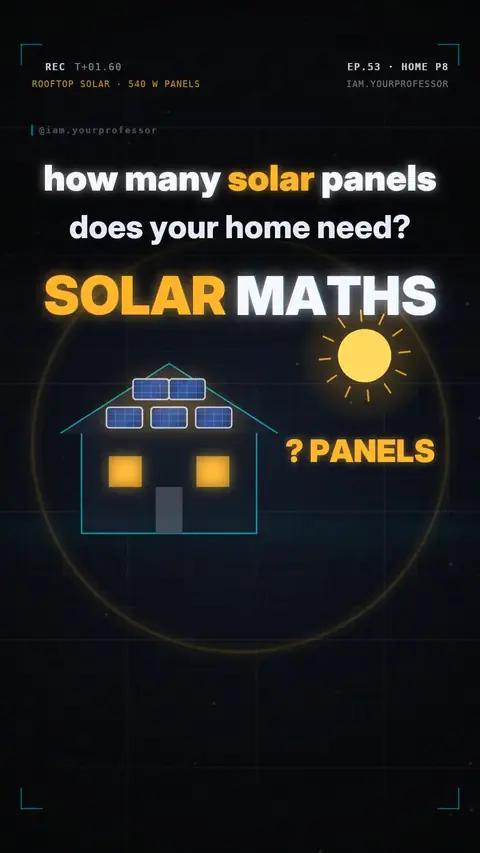 EP.53 · Home Electrical · 8Solar panels: how many does your home need?
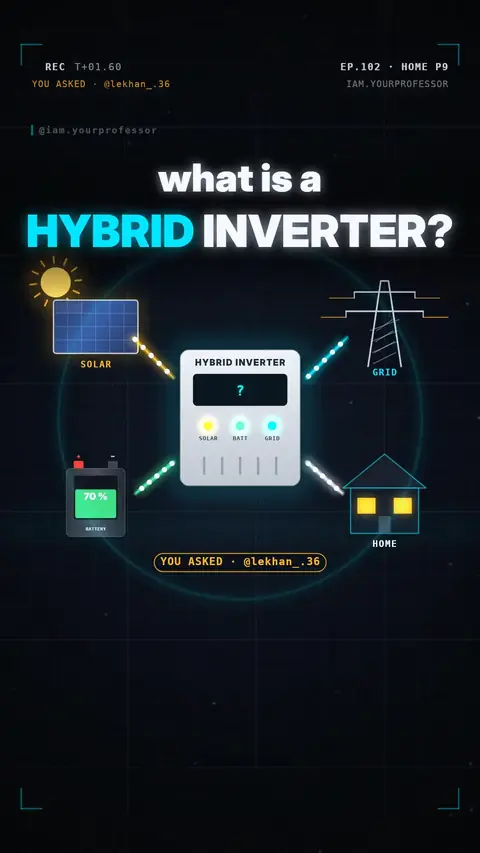 EP.102 · Home Electrical · 9Home Electrical Part 9: Hybrid inverter — solar, battery and grid in one box
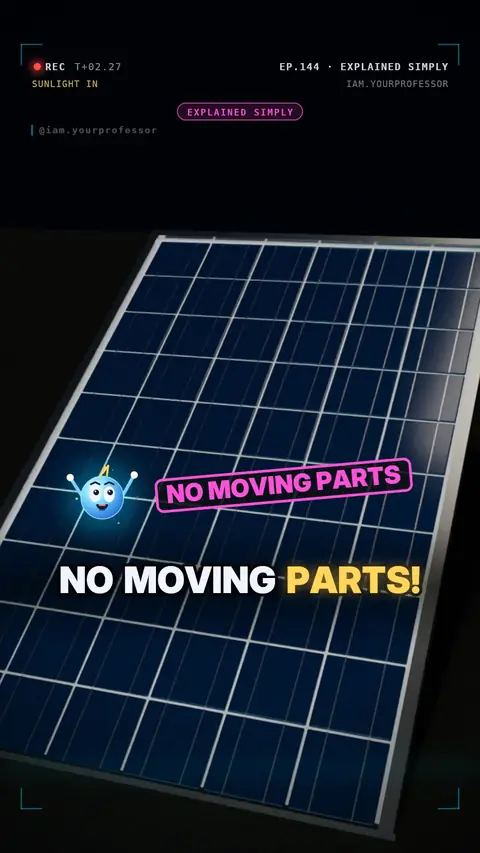 EP.144 · Explained SimplyExplained Simply #6: How does a solar panel make electricity?
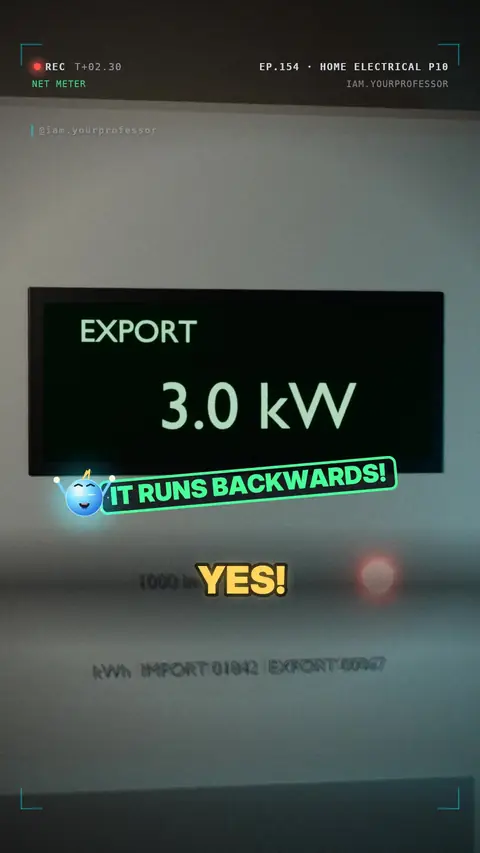 EP.154 · Home Electrical · 10Home Electrical Part 10: Net metering — when your meter runs backwards
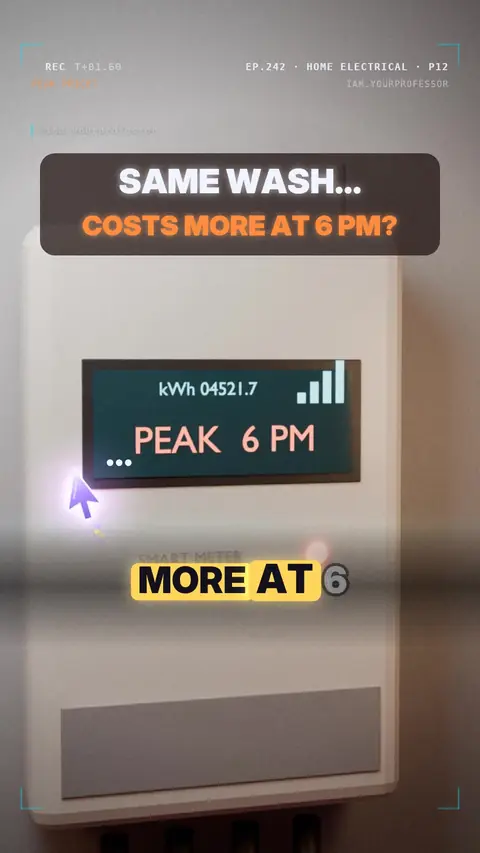 EP.242 · Home Electrical · 12Home Electrical Part 12: time-of-use — why evening power costs more
// NEWSLETTER · FREE
Get the next episode first
One email when a new episode drops. No spam.
✓ You're on the list! We'll email you when new lessons drop.
By joining you agree to the privacy policy.