Explained Simply #6: How does a solar panel make electricity?
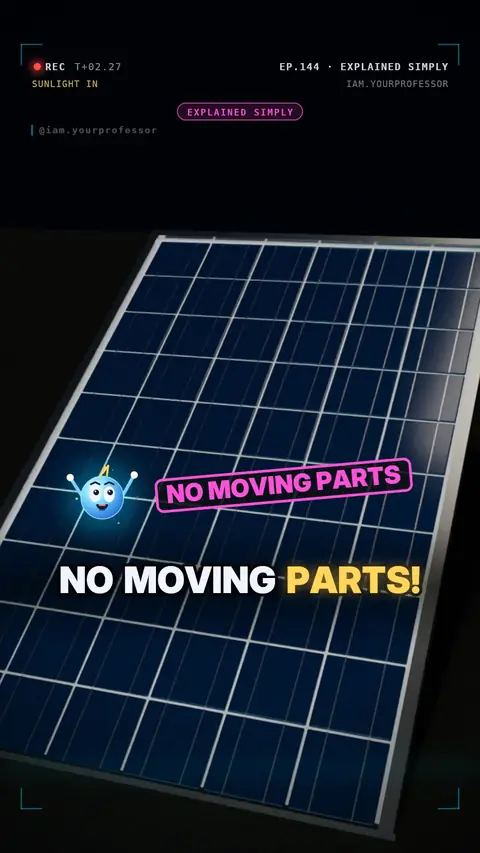
Light knocks electrons loose at the P-N junction inside the silicon; the junction pushes them one way = a current.
Sunlight into electricity — with NO moving parts! ☀️⚡
Each solar cell is two layers of silicon: N-type on top, P-type below. Where they meet (the P-N junction) there's a built-in push — an electric field.
Light hits the cell and knocks electrons loose. The push sends them one way: up to the top layer.
Connect a wire: the electrons flow out of the top, through your lamp, and back in at the bottom. That's a current! 💡 (It's DC.)
One cell makes about half a volt. A 60-cell panel ≈ 30 V.
Read the voiceover (transcript)
- Sunlight into electricity? No moving parts!
- Each cell is two layers of silicon. Where they meet, there's a built-in push.
- Light knocks electrons loose, and the push sends them one way!
- Out through the wire, through your lamp, and back in. That's a current!
- One cell makes about half a volt!
- Next: how a CPU does billions of things! Follow for more!
Related lessons
 EP.119 · Explained SimplyExplained Simply #4: How does Wi-Fi send a video through the air?
 EP.111 · Explained SimplyExplained Simply #3: How does GPS know where you are?
 EP.103 · Explained SimplyExplained Simply #2: How does a computer think with just ON and OFF?
 EP.95 · Explained SimplyWhat is electricity, really?
Get new lessons + early access to the full course
One email when new lessons drop. No spam, unsubscribe any time.
✓ You're on the list! We'll email you when new lessons drop.
By joining you agree to the privacy policy.