Home Electrical Part 12: time-of-use — why evening power costs more
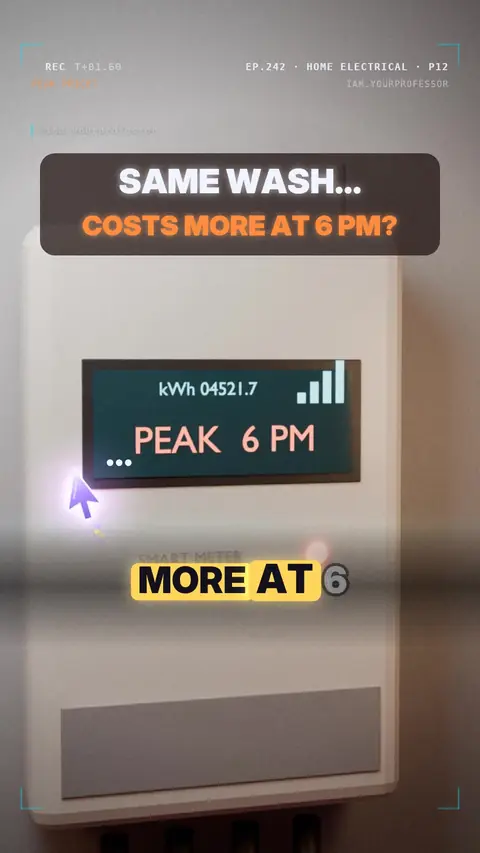
Many power companies charge more per kWh at peak hours (often about 5–9 pm) when everyone uses power at once, and less at night — a smart meter makes this possible by recording when you use it.
Same wash… but it costs more at 6 PM? 🧺⚡
⏰ Many power plans now change the price by the hour — "time-of-use" (or time-of-day) plans. Your smart meter records WHEN you use power, not just how much.
🍳 In the early evening (often about 5–9 PM) everyone gets home: cooking, lights, TV, AC or heating — all at once.
🌇 At the same time the sun sets, so solar power fades.
🏭 To keep up, the grid starts extra power plants that are expensive to run → peak power costs more.
🌙 Cheapest? Usually late at night, when few people use power (and in sunny places, sometimes midday too).
✅ Tip: use the timer — run the washer, dishwasher and EV charging off-peak.
🌍 Found in the USA, UK, Europe, Australia and India (ToD tariffs). Check your own plan's hours.
Read the voiceover (transcript)
- Same wash, but it costs more at six PM? Why?
- Many power plans change the price by the hour.
- In the evening, everyone cooks, turns on lights and AC!
- The sun sets, so extra power plants start, and they cost more.
- So when is it cheapest?
- Late at night, when few people use power!
- Run the washer and charge then!
- Next: the biggest power users in your home. Follow for Part thirteen!
Related lessons
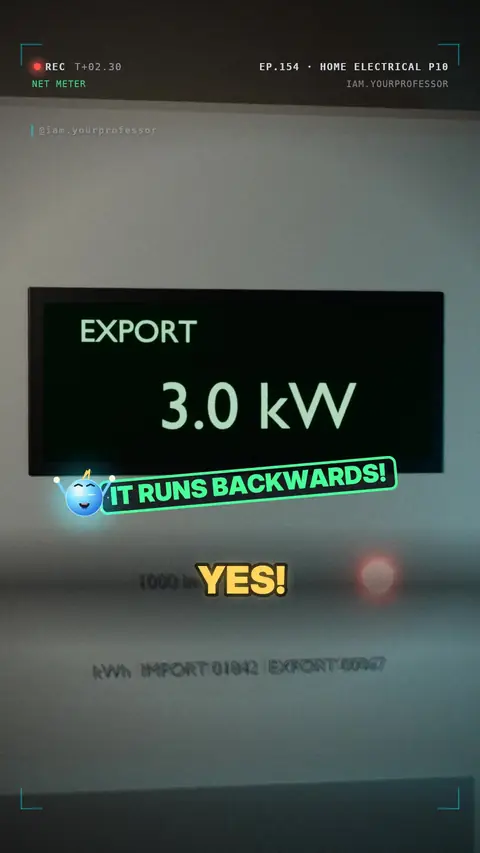 EP.154 · Home Electrical · 10Home Electrical Part 10: Net metering — when your meter runs backwards
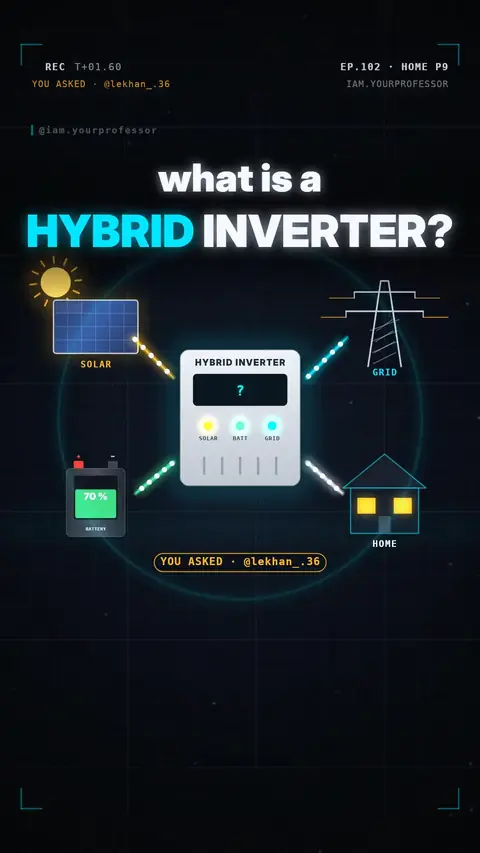 EP.102 · Home Electrical · 9Home Electrical Part 9: Hybrid inverter — solar, battery and grid in one box
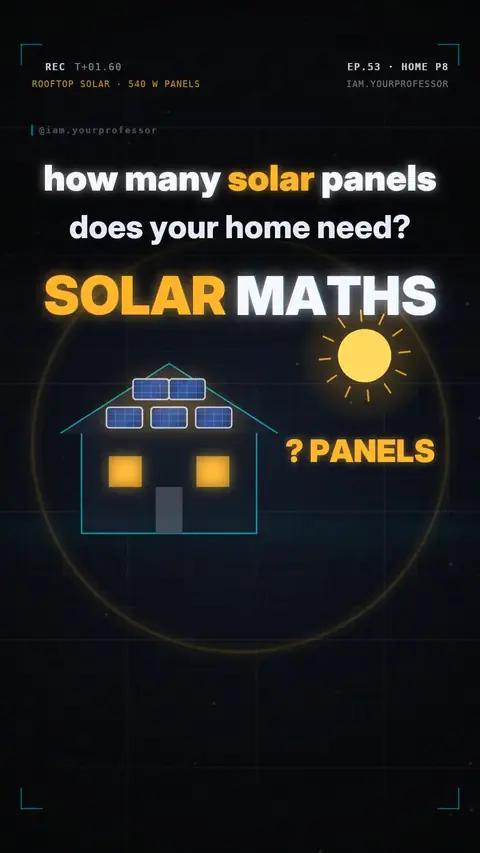 EP.53 · Home Electrical · 8Solar panels: how many does your home need?
 EP.50 · Home Electrical · 7Inverter backup: how long will your battery last?
Get new lessons + early access to the full course
One email when new lessons drop. No spam, unsubscribe any time.
✓ You're on the list! We'll email you when new lessons drop.
By joining you agree to the privacy policy.