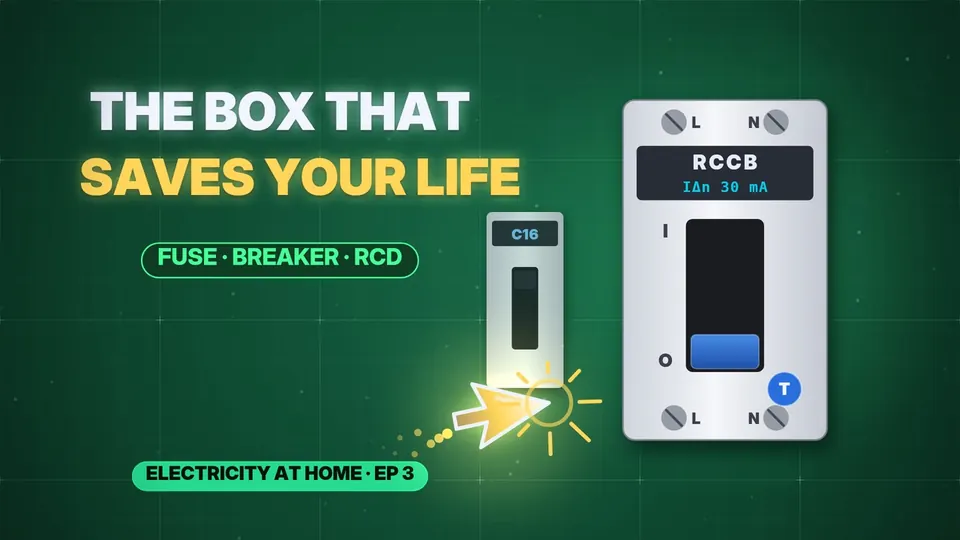
Electricity at Home: from the Power Plant to Your Socket · EPISODE 3 · 2:36
The Guards — Fuse, Circuit Breaker and RCD
Your kettle has a hidden fault. Touch it, and a small current flows through you — and your circuit breaker won't even notice. So what WILL save you? The fuse, the circuit breaker (overload vs short circuit) and the RCD / GFCI that catches the leak that kills, explained simply. Episode 3 of Electricity at Home, in under 3 minutes.
// CHAPTERS · TAP TO JUMP
// IN THIS EPISODE
What you'll learn
- A fuse is a thin wire made to be the weakest spot. Too much current → it melts and breaks the loop before your wiring can overheat. It works once: replace it with the same rating, never a bigger fuse or a piece of wire.
- A circuit breaker (MCB) does the same job and can be switched back on. Overload (too many heaters on one circuit): a bimetal strip warms, bends and trips it after a while. Short circuit (live touches neutral): a coil yanks the contacts open in milliseconds.
- Each circuit's breaker matches its wires: lighting ≈ 6–10 A, sockets ≈ 15–20 A (UK ring circuits 32 A).
- About 0.1 A (100 mA) through your body can stop your heart — 160 times less than a 16 A breaker even notices.
- An RCD / RCCB (GFCI in the USA) compares the current out on live with the current back on neutral. If ≥ 30 mA (≈ 5 mA for a GFCI) is missing — leaking through you to the ground — it trips in a split second (typically ≈ 0.03 s, faster than a blink).
- Press the TEST button about once a month. If it doesn't trip, call an electrician.
// 30-SECOND SHORTS ON THIS
Quick refreshers
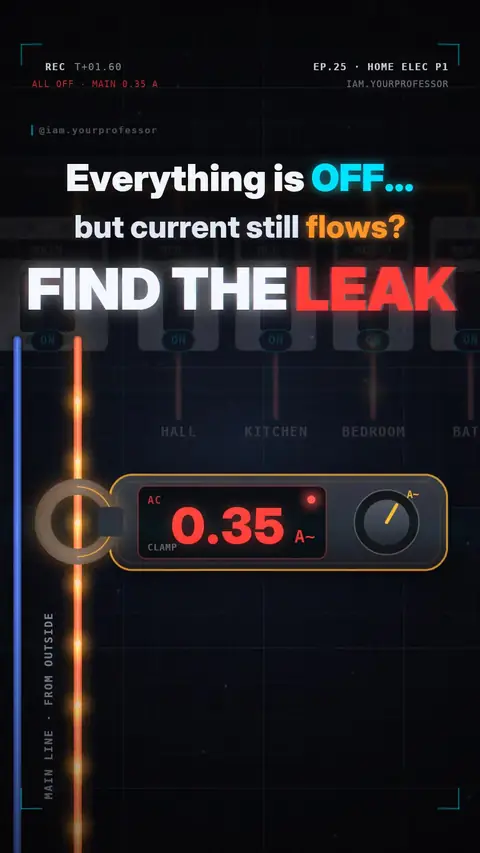 EP.25 · Home Electrical · 1Find a hidden current leak with a clamp meter
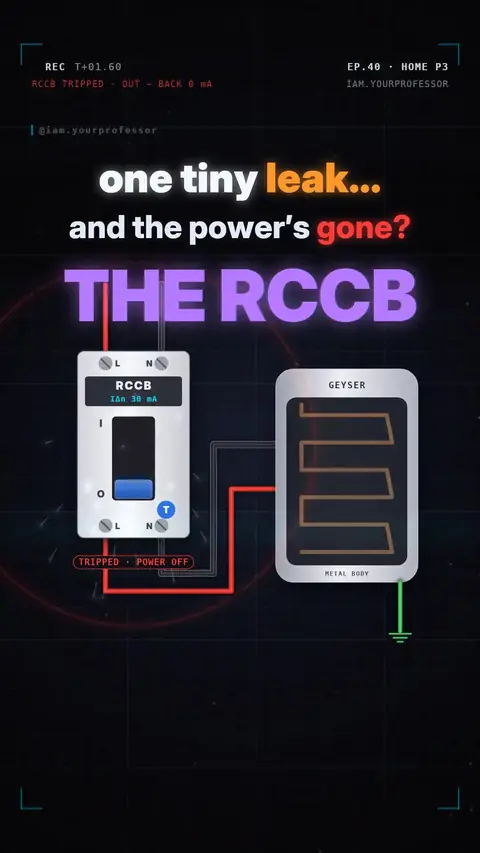 EP.40 · Home Electrical · 3RCCB: the switch that trips on a leak
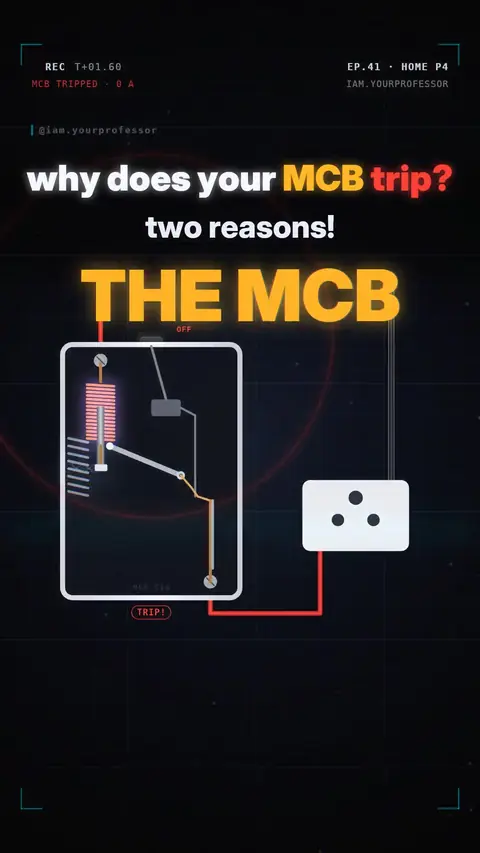 EP.41 · Home Electrical · 4MCB: overload vs short circuit
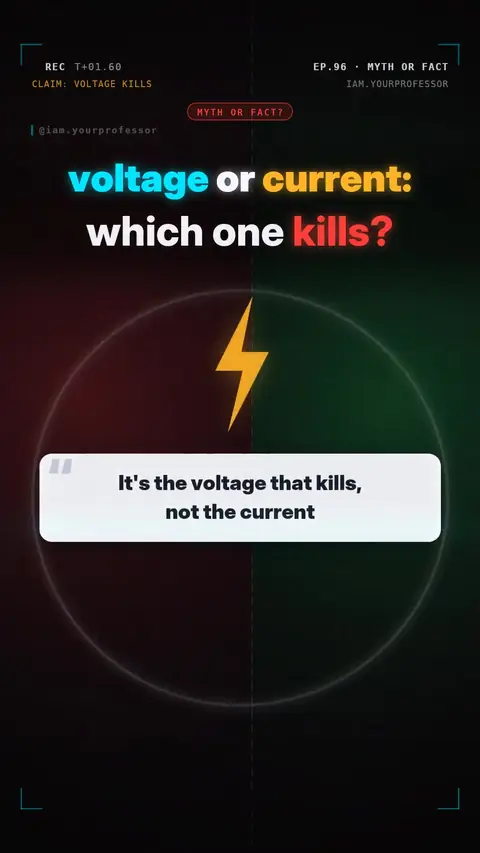 HALF TRUE
EP.96 · Myth or FactMyth or Fact: "It's the voltage that kills, not the current"
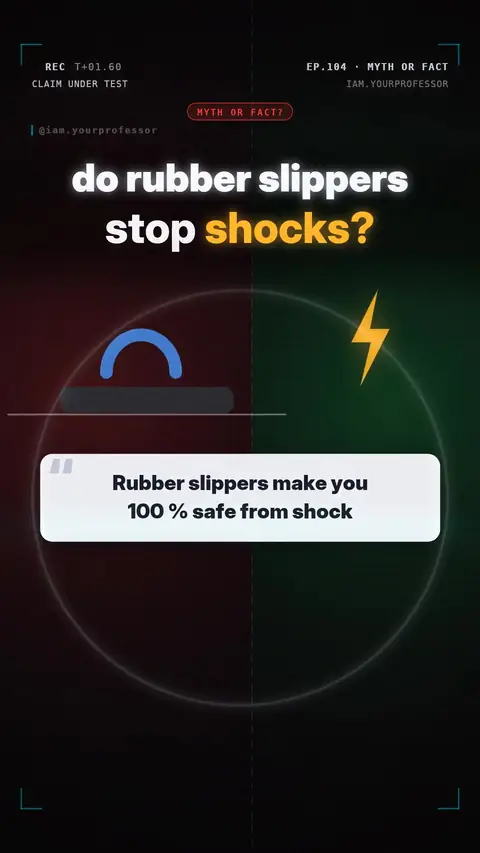 MYTH
EP.104 · Myth or FactMyth or Fact #7: "Rubber slippers make you 100 % safe from shock"
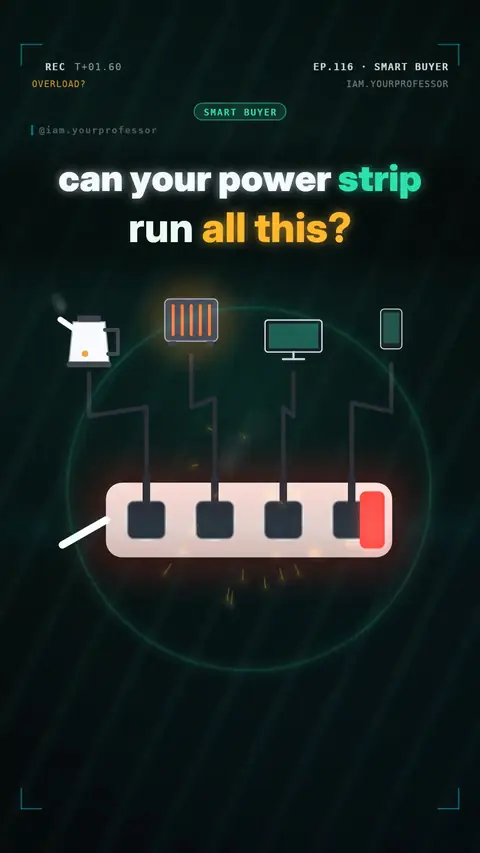 EP.116 · Smart BuyerSmart Buyer #5: Power strip — what can it really handle?
// NEWSLETTER · FREE
Get the next episode first
One email when a new episode drops. No spam.
✓ You're on the list! We'll email you when new lessons drop.
By joining you agree to the privacy policy.