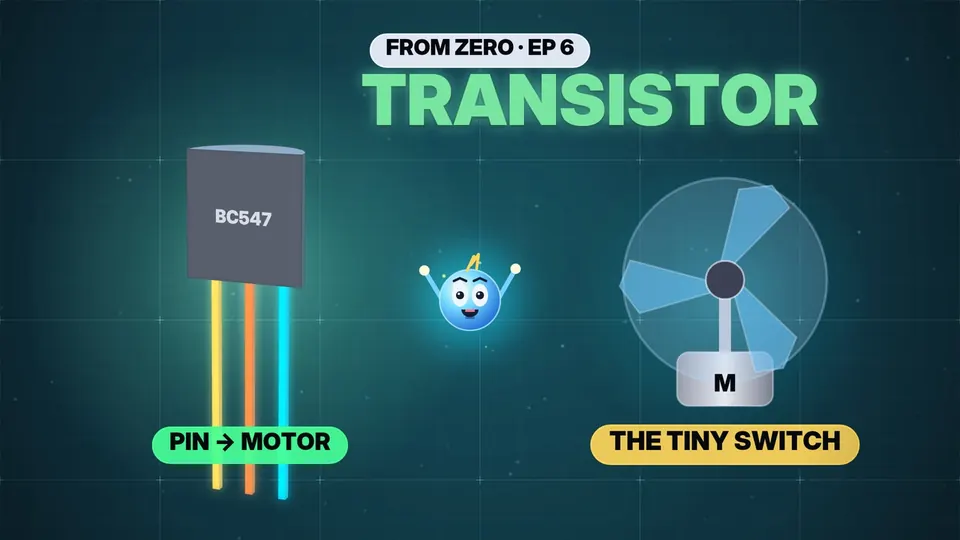
Electronics from Zero · EPISODE 6 · 2:46
The Transistor as a Switch (series finale)
How can a tiny Arduino pin switch on a motor that needs ten times more current? With a transistor — a tiny switch with no moving parts. Learn how it works, how to wire it, and why billions of them run your phone, in under 3 minutes.
// CHAPTERS · TAP TO JUMP
// IN THIS EPISODE
What you'll learn
- An Arduino pin can give only about 20 mA; a small motor or fan wants about 200 mA (10× more).
- A transistor has 3 legs: base, collector, emitter (BC547, flat side facing you: C · B · E). Like a water tap: the base is the handle — a tiny base current lets a current about 100× bigger flow from collector to emitter. No base current = off.
- NPN is the most common kind (BC547, 2N2222).
- The switch circuit: + supply → motor → collector, emitter → ground, Arduino pin → 1 kΩ resistor → base. Never skip the base resistor: (5 V − 0.7 V) ÷ 1 kΩ ≈ 4.3 mA — more than the 2 mA needed (200 mA ÷ 100), so it's fully on.
- Pin high → motor spins. Pin low → motor stops. Half on = weak motor and a hot transistor, so always switch fully on or off.
- Put a diode across a motor: it catches the voltage kick when it switches off.
- A relay clicks a few times a second; transistors in a chip switch billions of times a second, and a phone chip has billions of them, each about 1,000× thinner than a hair. On / off = 1 / 0: that's how computers think.
// 30-SECOND SHORTS ON THIS
Quick refreshers
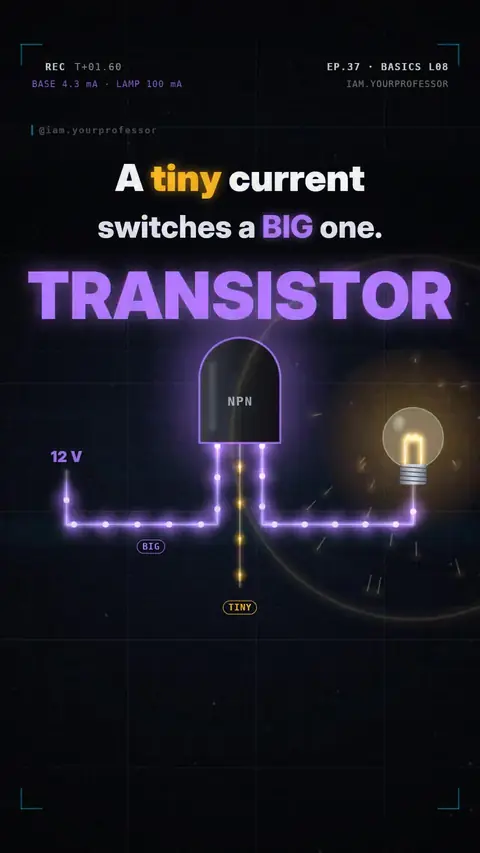 EP.37 · Electronics Basics · 8The TRANSISTOR: a tiny current switches a BIG one
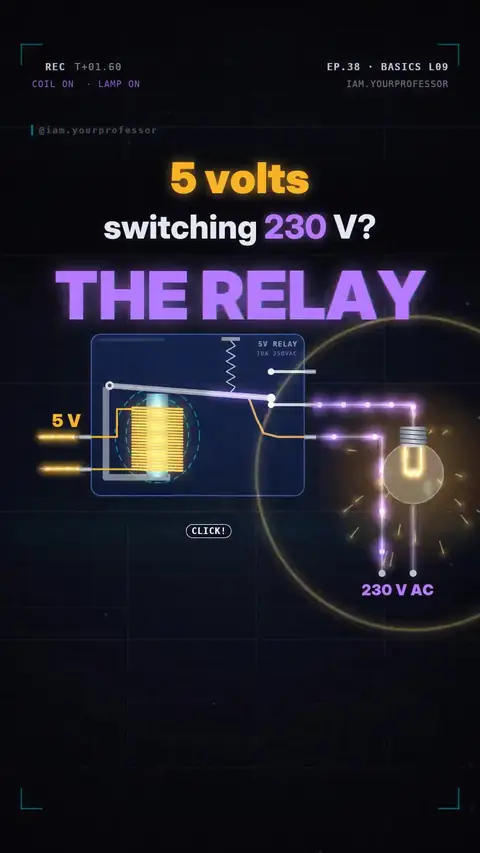 EP.38 · Electronics Basics · 9The RELAY: 5 V switches 230 V
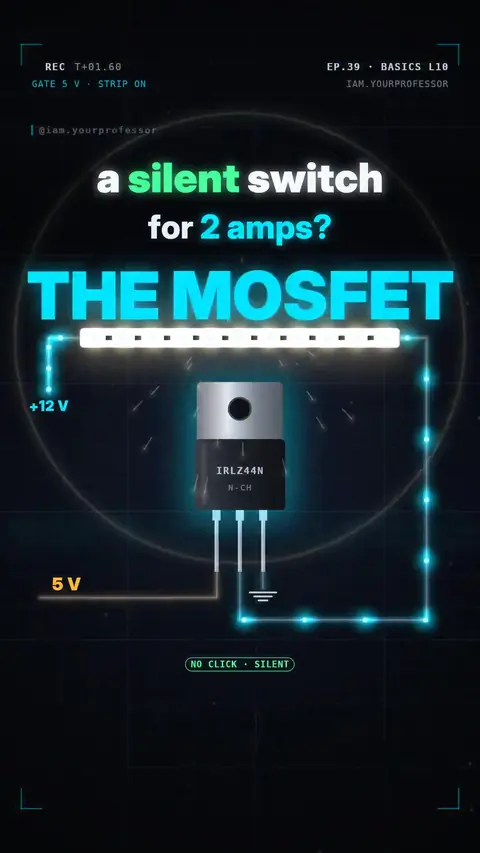 EP.39 · Electronics Basics · 10The MOSFET: big DC loads, no click
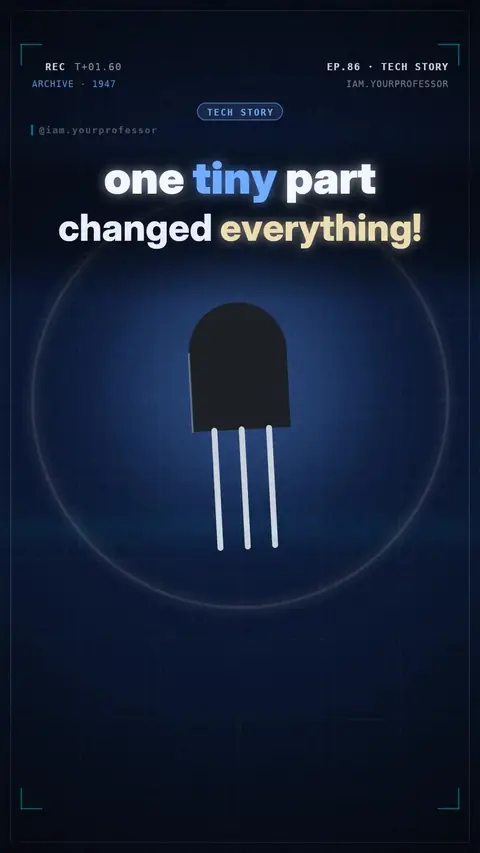 EP.86 · Tech StoryTech Story: the transistor that changed everything
 EP.103 · Explained SimplyExplained Simply #2: How does a computer think with just ON and OFF?
 EP.152 · Explained SimplyExplained Simply #7: How does a CPU do billions of things a second?
// NEWSLETTER · FREE
Get the next episode first
One email when a new episode drops. No spam.
✓ You're on the list! We'll email you when new lessons drop.
By joining you agree to the privacy policy.