Electronics from Zero · EPISODE 4 · 2:58
Series vs Parallel
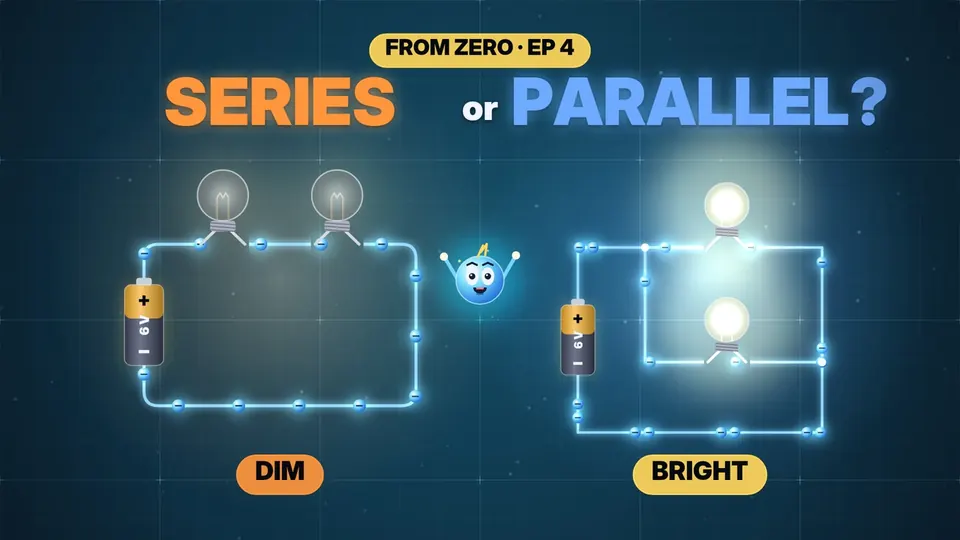
Series or parallel — what really changes? Two bulbs, one battery, and the surprise that more resistors can mean LESS resistance. Learn it in under 3 minutes, with real numbers you can try.
// CHAPTERS · TAP TO JUMP
// IN THIS EPISODE
What you'll learn
- Series = one path. The same current flows everywhere; the voltage is shared (two equal bulbs on 6 V get 3 V each, so both glow dimmer). One bulb breaks → everything goes dark (old Christmas lights). Resistors add: 100 + 220 = 320 Ω.
- Parallel = side by side, each part on its own path. Every part gets the full voltage; the currents add up (1 A + 1 A = 2 A from the battery). One breaks → the others stay on. Your home is wired this way: 230 V · 50 Hz (India, UK, Europe) / 120 V · 60 Hz (USA, Canada).
- More resistors in parallel = LESS total resistance (more paths, like opening a second door). Two equal → half: 200 Ω and 200 Ω → 100 Ω. Two different: R1 × R2 ÷ (R1 + R2).
- Test: 6 V + two 1 kΩ resistors. Series 2,000 Ω → 3 mA. Parallel 500 Ω → 12 mA. Four times the current!
// 30-SECOND SHORTS ON THIS
Quick refreshers
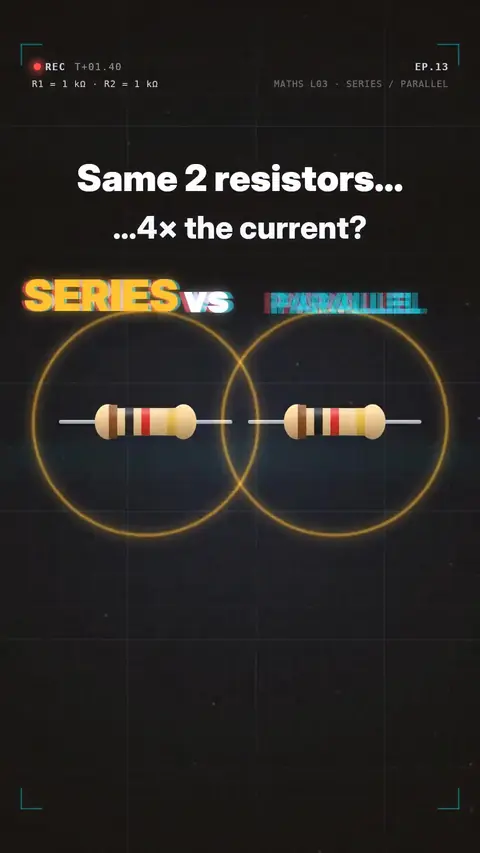 EP.13 · Maths for Electronics · 3Series vs parallel resistors
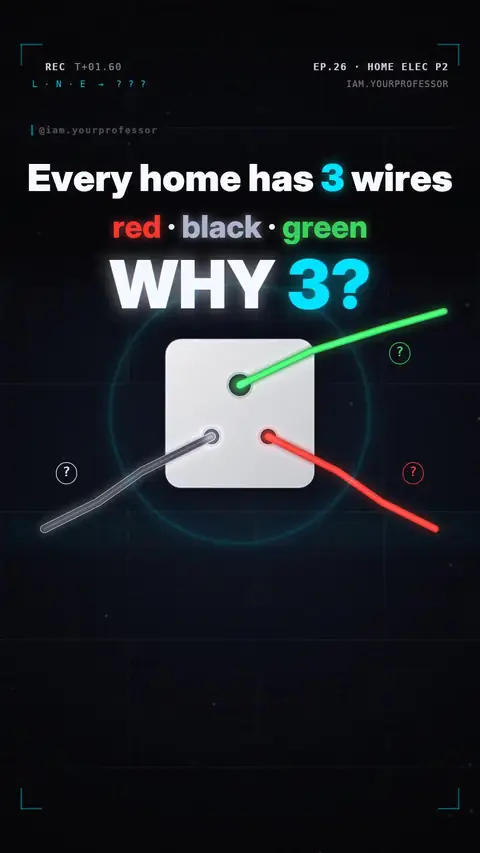 EP.26 · Home Electrical · 2Red, black, green: the 3 wires in your home
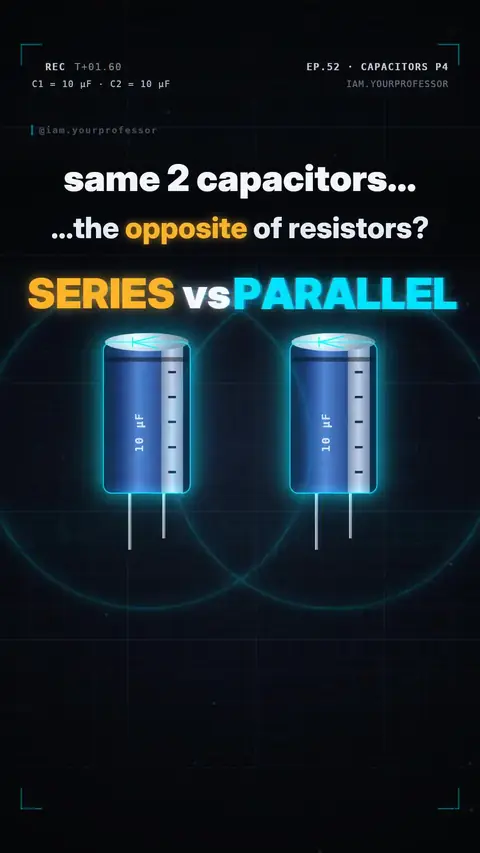 EP.52 · Capacitor Series · 4Capacitors in series vs parallel
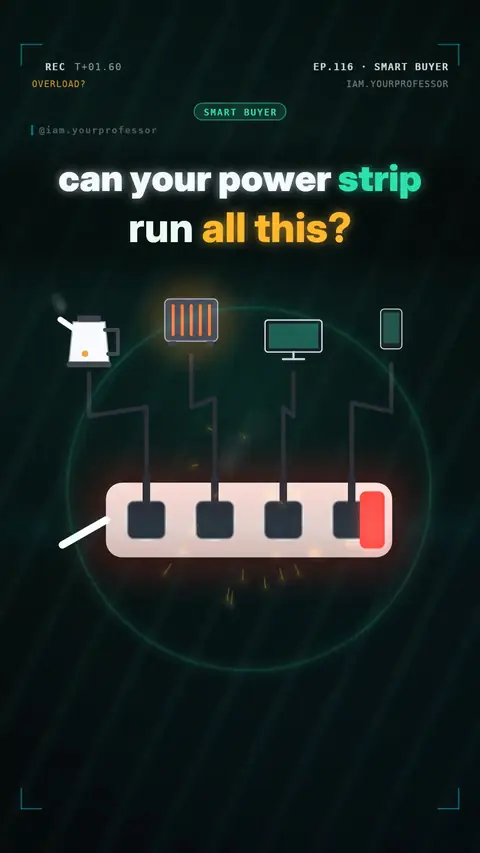 EP.116 · Smart BuyerSmart Buyer #5: Power strip — what can it really handle?
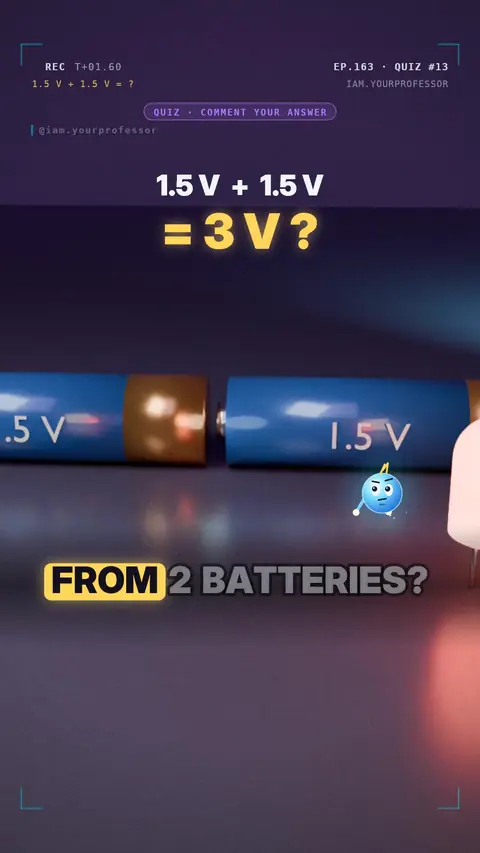 EP.163 · QuizQuiz #13: Two 1.5 V batteries — how do you get 3 V? → B, plus to minus
// NEWSLETTER · FREE
Get the next episode first
One email when a new episode drops. No spam.
✓ You're on the list! We'll email you when new lessons drop.
By joining you agree to the privacy policy.