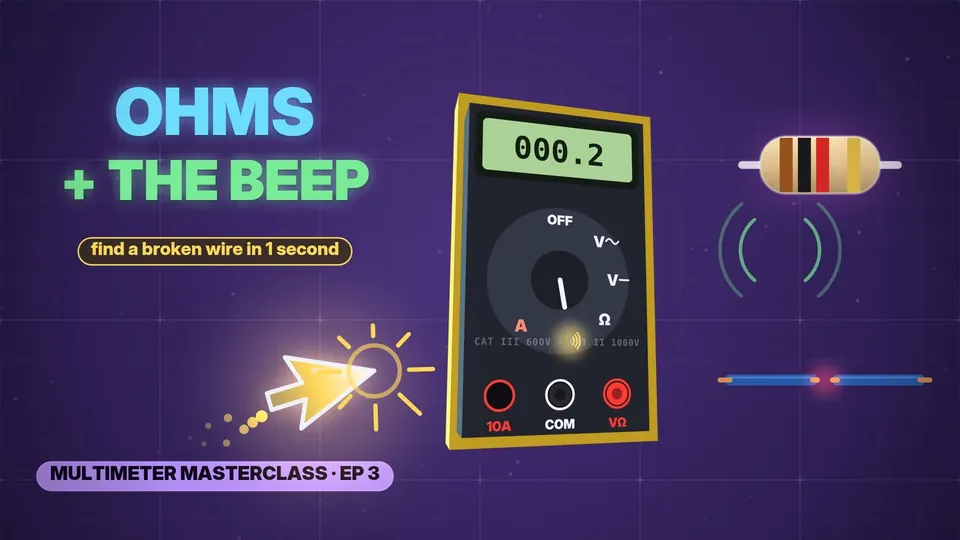
Multimeter Masterclass · EPISODE 3 · 2:39
Resistance + the Continuity Beep
Is that cable broken inside? Learn the two multimeter tests you'll use the most: measuring resistance (ohms) and the continuity beep. Colour codes vs the reading, what OL means, the wiggle test, and why parts on a board can fool your meter. For beginners, in under 3 minutes.
// CHAPTERS · TAP TO JUMP
// IN THIS EPISODE
What you'll learn
- Ohms mode sends its own tiny test current, so the power must be OFF. Black lead → COM, red → VΩ, dial to Ω.
- Probes on the two legs — which way round doesn't matter.
- Brown-black-red = 1,000 Ω; the meter shows 987 Ω. Gold band = ± 5 %, so 950–1,050 Ω is fine.
- Don't pinch both metal tips: your body (≈ 100 kΩ) becomes a second resistor in parallel.
- Probes in the air → OL = overload: too big to measure, no path. On a manual meter, OL can also mean the range is too low — turn it up one step.
- Continuity (the sound-wave symbol): tips together → beep, ≈ 0 Ω. One probe on each end of a cable: no beep = broken inside. Wiggle the cable: a beep that cuts in and out = a loose break. Works for fuses, switches and plugs: beep = a path, silence = a gap.
- On a board, parts in parallel fool the reading (two 1 kΩ side by side read 500 Ω). Lift one leg, or measure before soldering. Big capacitors can hold charge — let them drain first.
// 30-SECOND SHORTS ON THIS
Quick refreshers
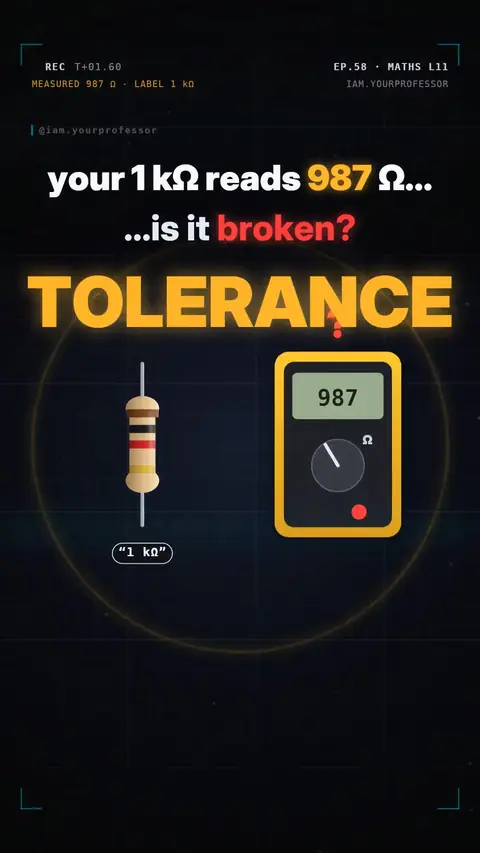 EP.58 · Maths for Electronics · 11Tolerance: is your 1 kΩ really 1 kΩ?
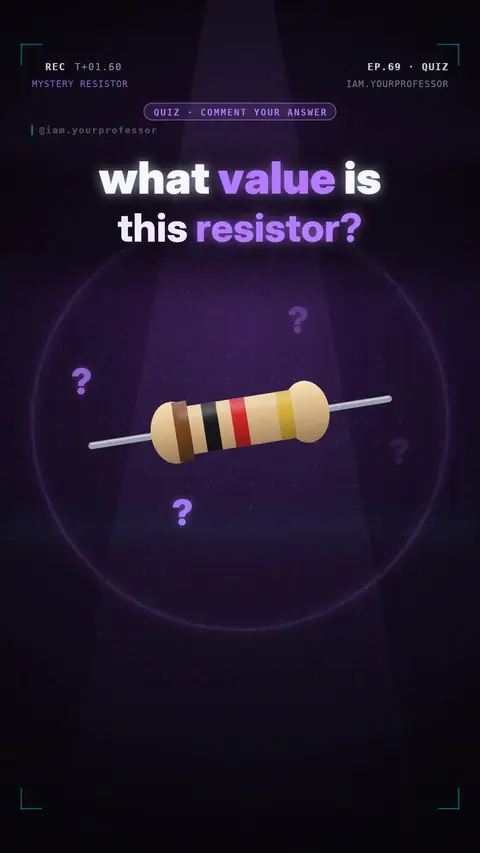 EP.69 · QuizQuiz: brown-black-red-gold, what value is this resistor?
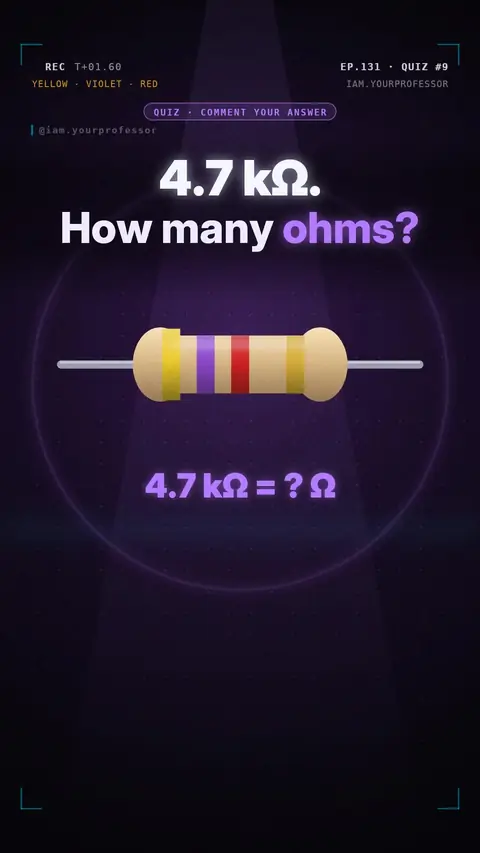 EP.131 · QuizQuiz #9: 4.7 kΩ is how many ohms?
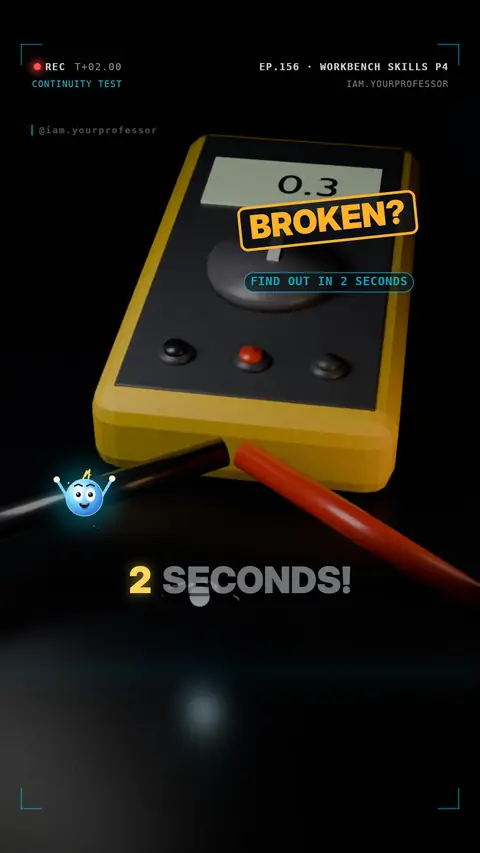 EP.156 · Workbench Skills · 4Workbench Skills Part 4: Continuity beep — find a broken wire
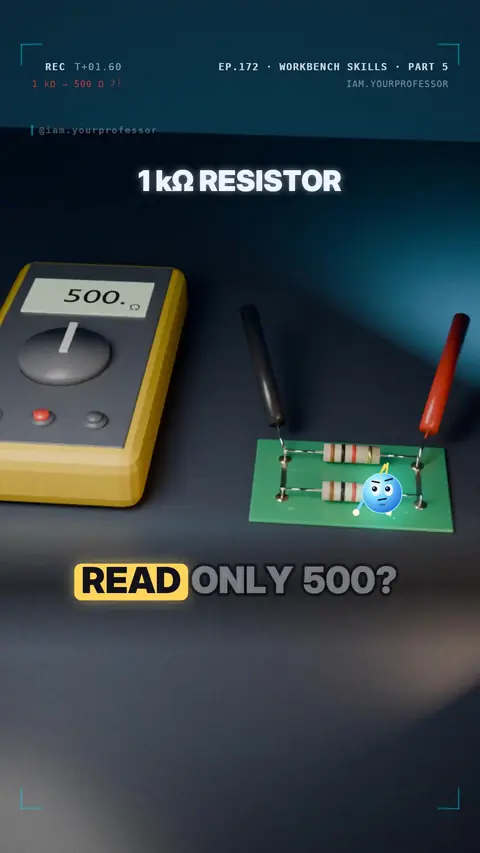 EP.172 · Workbench Skills · 5Workbench Skills Part 5: Measure resistance the right way
// NEWSLETTER · FREE
Get the next episode first
One email when a new episode drops. No spam.
✓ You're on the list! We'll email you when new lessons drop.
By joining you agree to the privacy policy.