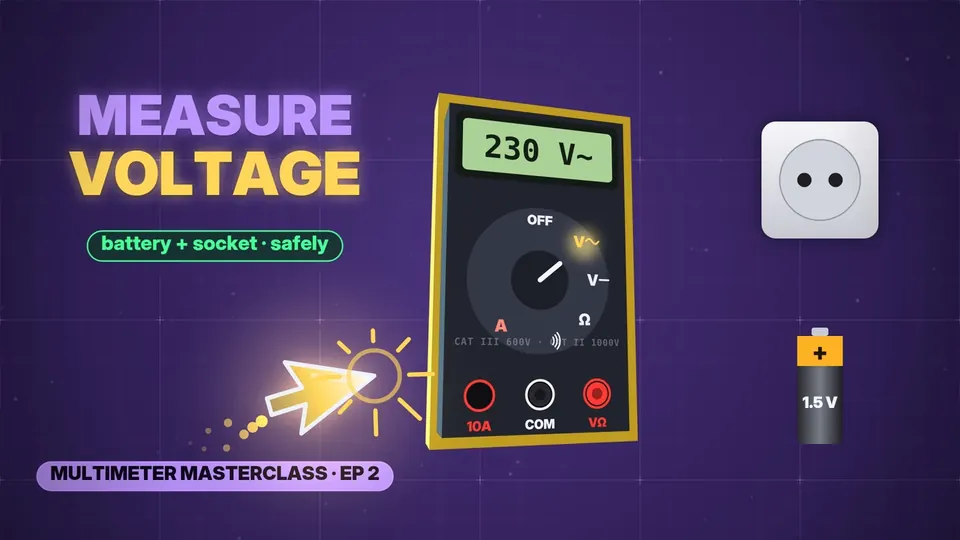
Multimeter Masterclass · EPISODE 2 · 2:34
Measure Voltage — a Battery and the Wall Socket, Safely
Is your battery dead or just tired? Learn to measure voltage with a multimeter: DC volts on a battery, AC volts on the wall socket — safely. Probe colours, what the numbers mean, the CAT rating, finger guards and two pro tips. For beginners, in under 3 minutes.
// CHAPTERS · TAP TO JUMP
// IN THIS EPISODE
What you'll learn
- Black lead → COM, red lead → VΩ, dial to DC volts (V with a straight line). Red probe on +, black on −. Voltage is always measured across two points.
- A fresh AA ≈ 1.6 V; below ≈ 1.3 V it's getting weak. A fresh 9 V battery reads a little over 9 V.
- Probes swapped? No damage — you just see a minus sign (−1.58 V).
- Two cells in a row (+ to −) add up: 1.6 + 1.6 ≈ 3.2 V.
- Mains can kill. Not trained? Just watch and practise on batteries.
- Socket: dial to AC volts (V with a wavy line), red stays in VΩ — never the 10 A hole. Your meter must be at least CAT II 300 V (CAT III is better). Fingers behind the finger guards, never touch the metal tips.
- You'll read about 230 V · 50 Hz (India, UK, Europe) or 120 V · 60 Hz (USA, Canada); a few volts up or down is normal.
- Pro tips: auto range picks the range (manual meter: start high and work down) · 0 V on a socket? Test the meter on a battery first — maybe the meter is broken · switch the dial to OFF when you're done.
// 30-SECOND SHORTS ON THIS
Quick refreshers
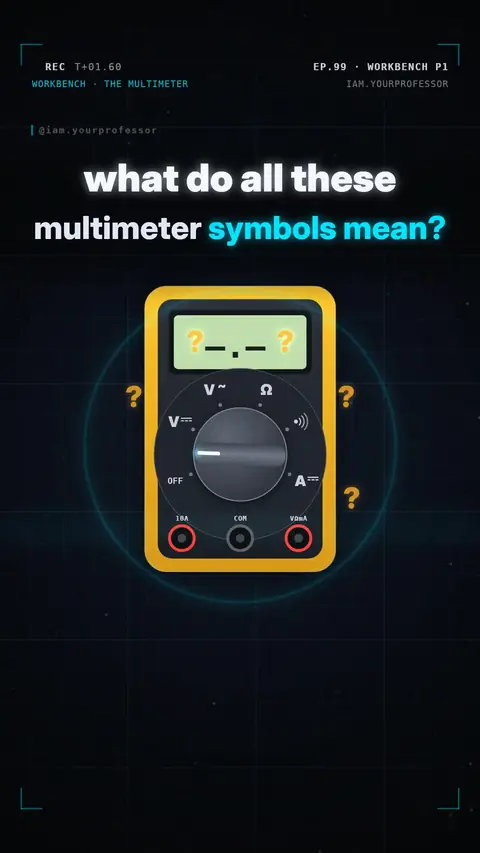 EP.99 · Workbench Skills · 1Workbench Skills Part 1: Meet the multimeter — every symbol on the dial
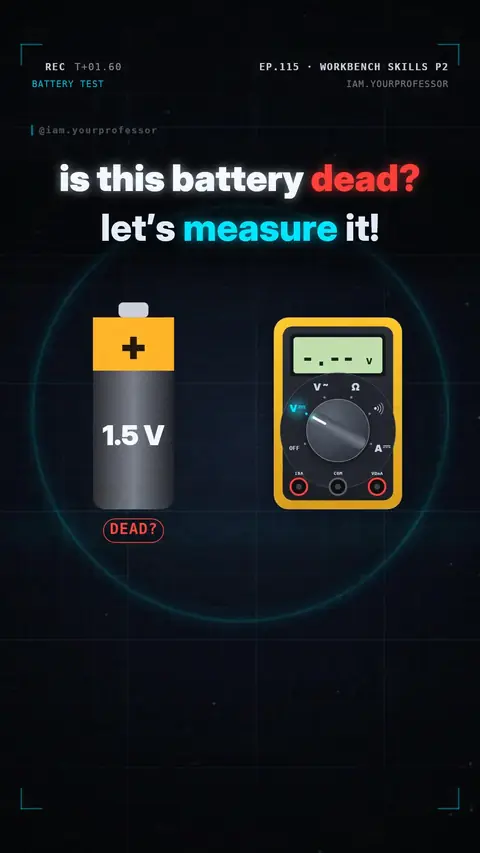 EP.115 · Workbench Skills · 2Workbench Skills Part 2: Measure voltage — is this battery dead?
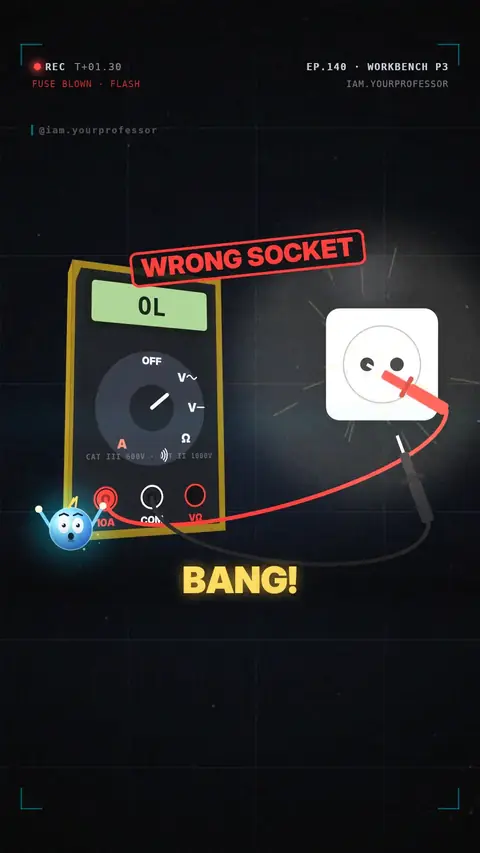 EP.140 · Workbench Skills · 3Workbench Skills Part 3: Measure mains voltage safely
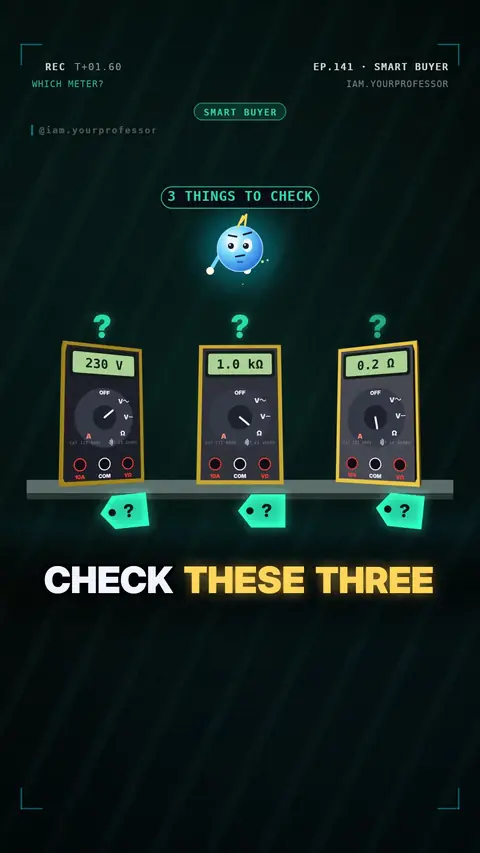 EP.141 · Smart BuyerSmart Buyer #6: Your first multimeter — 3 things to check
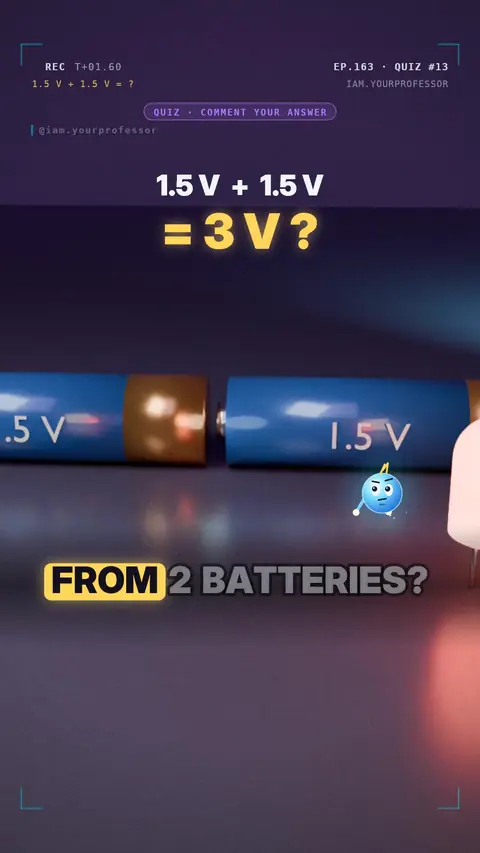 EP.163 · QuizQuiz #13: Two 1.5 V batteries — how do you get 3 V? → B, plus to minus
// NEWSLETTER · FREE
Get the next episode first
One email when a new episode drops. No spam.
✓ You're on the list! We'll email you when new lessons drop.
By joining you agree to the privacy policy.