Ideas That Built Your Phone: the Golden Age of Science · EPISODE 3 · 2:57
The First Machines You Could Program — the Banu Musa + al-Jazari
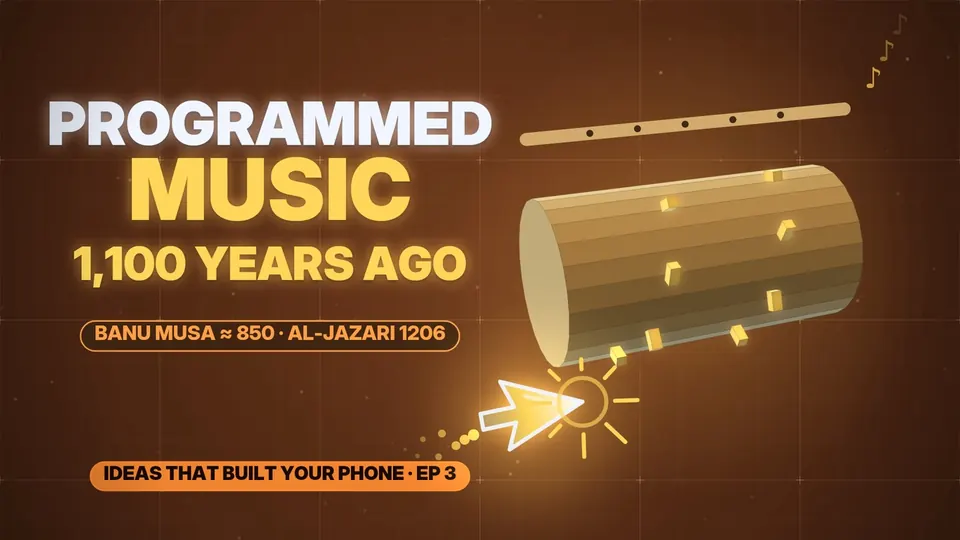
Around 850, three brothers in Baghdad described a flute player that played all by itself — its tune set by pins on a turning drum. In 1206 al-Jazari built an elephant clock and a boat of robot musicians whose beat came from pegs you could move. Same machine, new instructions: the big idea behind every program on your phone, in under 3 minutes. Episode 3 of Ideas That Built Your Phone: the Golden Age of Science.
// CHAPTERS · TAP TO JUMP
// IN THIS EPISODE
What you'll learn
- The Banu Musa ("sons of Musa") — Muhammad, Ahmad and al-Hasan — worked in Baghdad in the 9th century and wrote the Book of Ingenious Devices (about 850): about 100 clever machines, like trick jugs and fountains.
- They also described a water-powered flute player whose tune was set by pins on a turning drum: a pin works a lever, the lever opens a hole on the flute, out comes a note. Swap the drum = a new tune — one of the earliest known programmable machines.
- al-Jazari, engineer in Diyarbakır (now Turkey), finished his Book of Knowledge of Ingenious Mechanical Devices in 1206: 50 machines with drawings and step-by-step notes.
- His elephant clock: a bowl with a small hole floats in water inside the elephant and sinks in half an hour; it pulls a string, a ball drops, the figures move — then it starts again.
- His boat of robot musicians: the drummer's beat came from pegs on a turning wheel. Move the pegs = a new rhythm.
- The same idea came back in music boxes, in the Jacquard loom (1804, punched cards set the pattern) and in early computers (programs on punched cards: hole or no hole = 1 or 0). Your phone does it with billions of tiny switches.
- Episode 2's challenge: lift the candle, and its picture on the wall moves DOWN — the rays cross in the hole, so everything flips.
// 30-SECOND SHORTS ON THIS
Quick refreshers
 EP.189 · Tech StoryTech Story #8 · Golden Age G1: al-Khwarizmi — the word 'algorithm' is his name
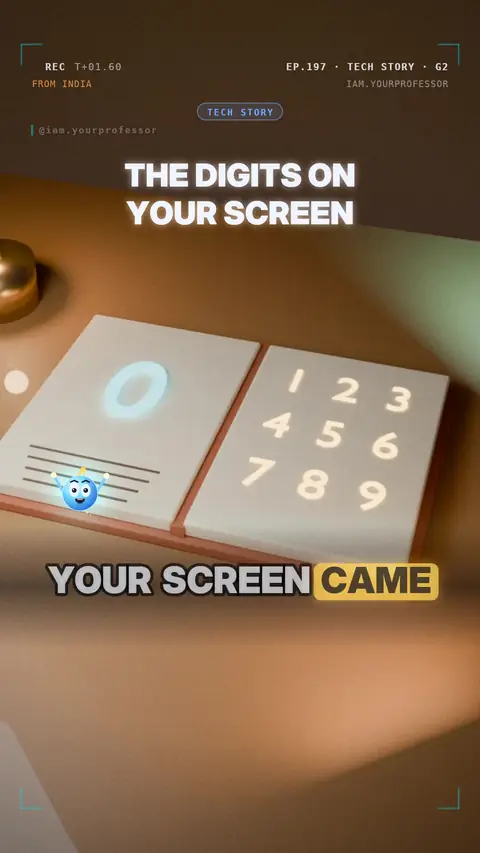 EP.197 · Tech StoryTech Story #9 · Golden Age G2: the digits on your screen — India → Baghdad → Europe
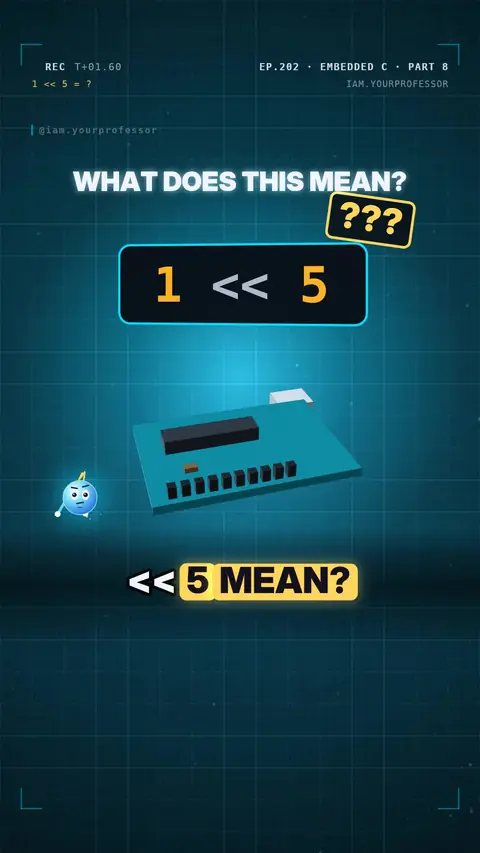 EP.202 · Embedded C · 8Embedded C Part 8: the bit shift trick — what does 1 << 5 mean?
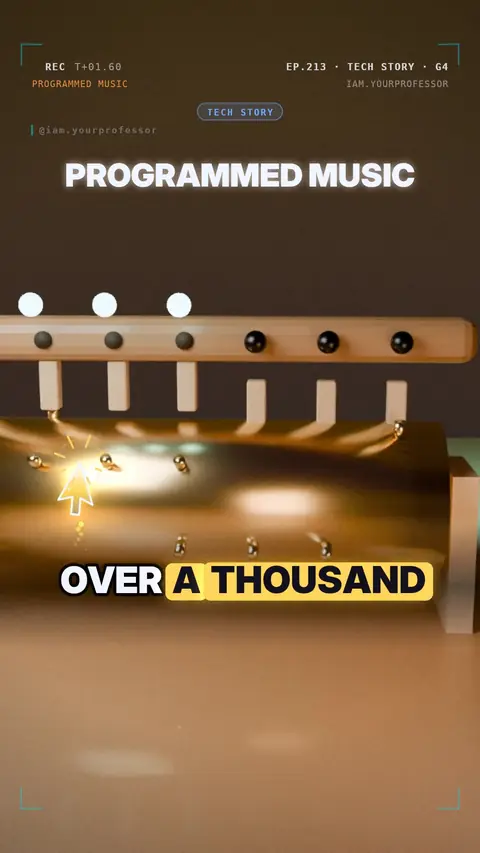 EP.213 · Tech StoryTech Story #11 · Golden Age G4: the Banu Musa brothers — a music machine you could program
 EP.221 · Tech StoryTech Story #12 · Golden Age G5: al-Jazari — the robots of 1206
// NEWSLETTER · FREE
Get the next episode first
One email when a new episode drops. No spam.
✓ You're on the list! We'll email you when new lessons drop.
By joining you agree to the privacy policy.