AC vs DC: What's the Difference? (And How Chargers Turn AC Into DC)
AC vs DC in plain English: what each one is, 50 Hz vs 60 Hz, why homes use AC and phones use DC, and how a diode bridge turns AC into DC.
ON THIS PAGE
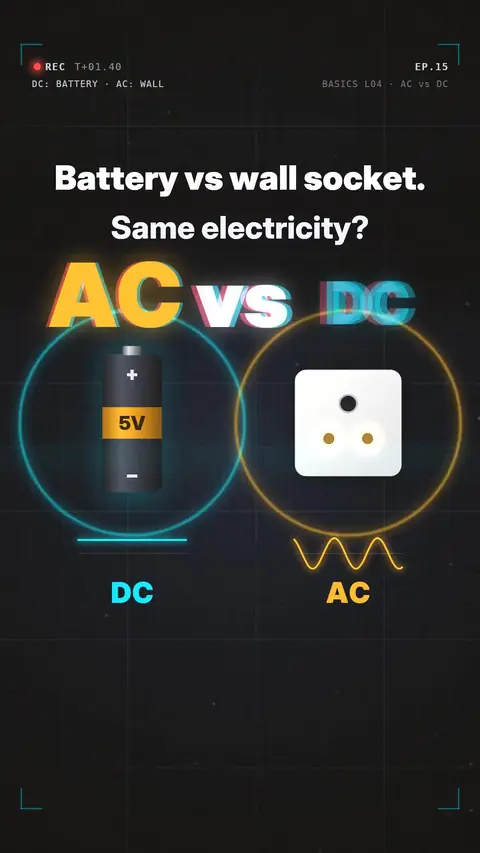
The wall socket gives you AC. Your phone, laptop and every battery use DC. Between them sits a little box — the charger — that quietly converts one into the other. Here is what the two really are, why both exist, and how the conversion works.
AC vs DC at a glance
| AC (alternating current) | DC (direct current) | |
|---|---|---|
| Direction | Flips back and forth | One way only |
| Waveform | Sine wave | Flat line |
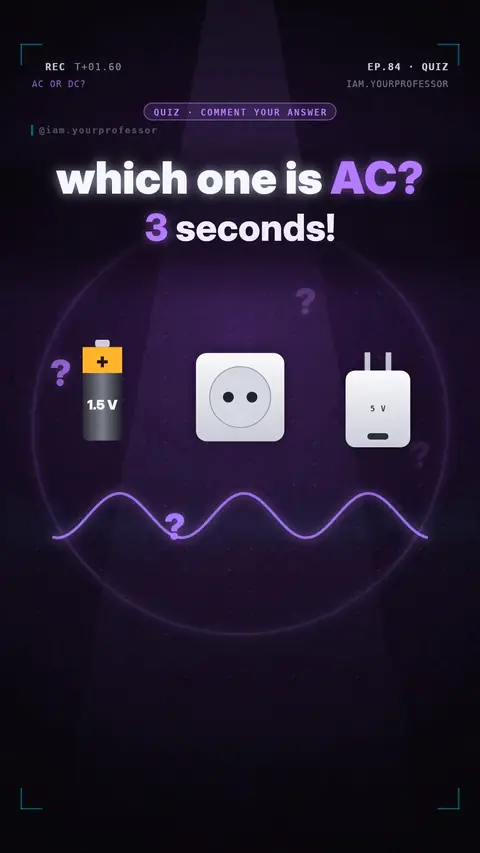
| Where you get it | Wall sockets, the grid, generators | Batteries, USB, solar panels, chargers |
| Typical home voltage | 230 V · 50 Hz (India, UK, Europe) · 120 V · 60 Hz (USA, Canada) | 1.5 V, 3.7 V, 5 V, 12 V, 48 V … |
| Change the voltage | Easy, with a transformer | Needs electronic converters |
| Used by | Motors, heaters, the power grid | Phones, laptops, LEDs, chips, EVs' batteries |
| Multimeter setting | V~ | V⎓ |
What "50 Hz" and "230 V" really mean
- 50 Hz = the current changes direction and back 50 times every second (one full cycle every 20 ms). At 60 Hz, a cycle takes about 16.7 ms.
- 230 V is the RMS value — the DC voltage that would heat a heater the same amount. The real peaks are higher: 230 × √2 ≈ 325 V (and 120 V peaks at about 170 V).
Why homes use AC
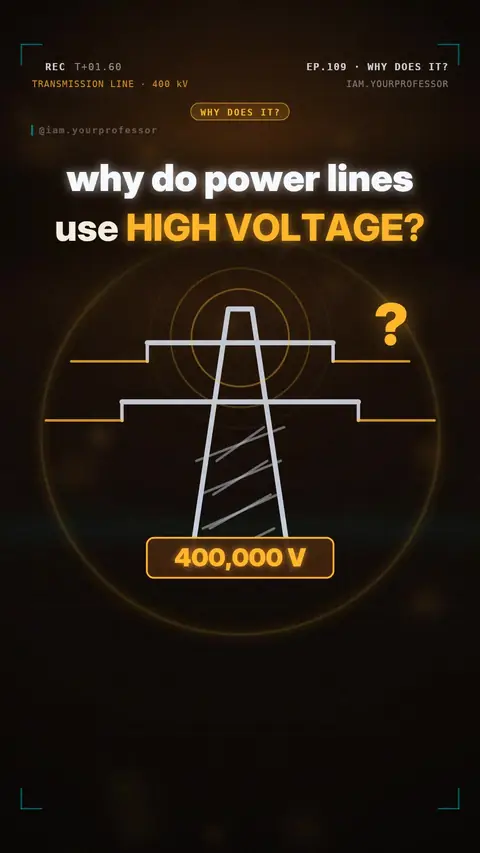
In the 1880s, Edison's DC and Tesla/Westinghouse's AC fought the "war of the currents". AC won for one big reason: transformers. With AC, a simple transformer can step the voltage up to hundreds of thousands of volts for long power lines and down again for your home.
High voltage means low current for the same power, and since cable losses grow with current squared (P = I² × R), the grid wastes far less energy. Today, very long links sometimes use high-voltage DC again, thanks to modern power electronics.
Why electronics need DC
Chips, LEDs and batteries need a steady voltage with a fixed + and −. Feed them AC and the polarity would flip 100 or 120 times a second. So every charger and power supply converts AC into DC.
How AC is turned into DC (rectifier)
Try it in the diode lab — flip the diode, then watch AC become smooth DC on the scope:
⚡ LOADING THE CALCULATOR…
Free, no sign-up. Prefer a bigger screen? Open the Diode lab calculator in the Lab →
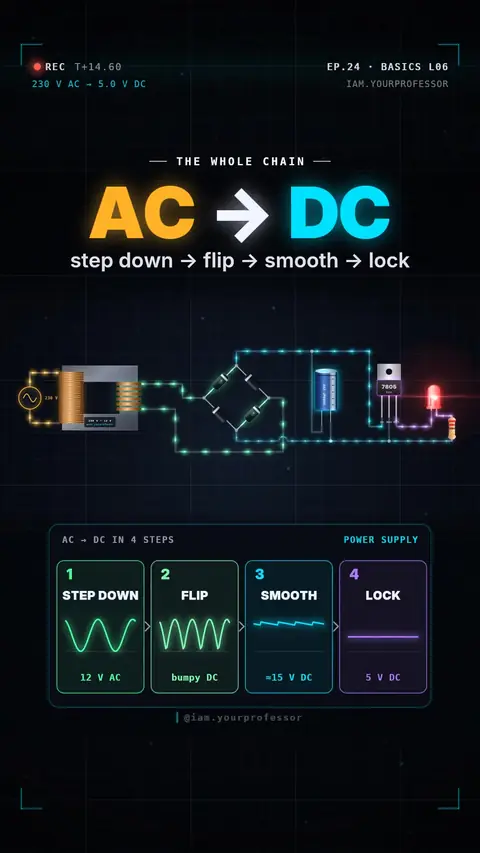
- Step down / switch-mode: a transformer (or, in modern chargers, a fast switching circuit) brings the voltage down safely.
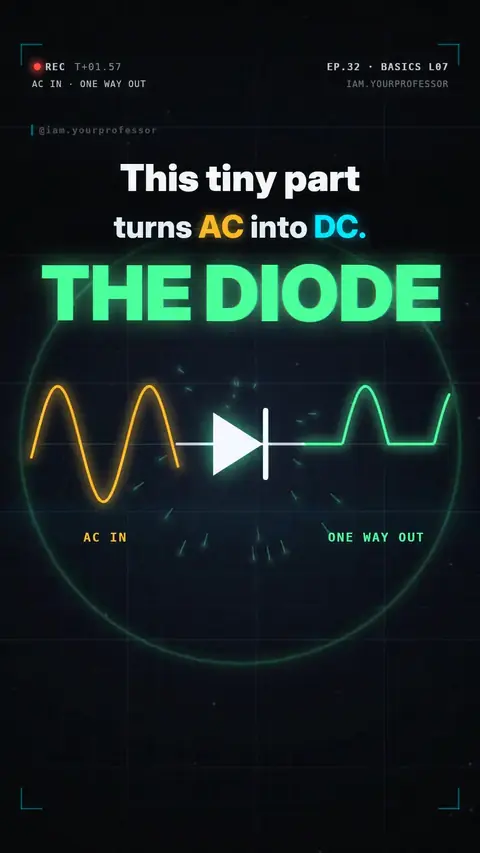
- Rectify with diodes: a diode lets current through only one way.
- One diode = half-wave: only the top halves of the sine wave get through.
- Four diodes in a bridge = full-wave: the bottom halves are flipped up too, so you get bumps 100 (or 120) times a second.
- Smooth with a capacitor: a big capacitor fills up on each bump and feeds the circuit in between, so the bumps become an almost flat line.
- Regulate: a regulator holds the output at exactly 5 V (or whatever is needed).
Is AC or DC more dangerous?
Both can kill. Household AC is especially dangerous because 50/60 Hz can disturb the heart's rhythm and makes muscles clench. High-voltage DC (EV batteries, solar strings) is also very dangerous. Never work on live mains — switch off at the breaker and use a qualified electrician.
Frequently asked questions
What is the main difference between AC and DC?
AC changes direction many times a second; DC always flows in one direction.
Is a battery AC or DC?
DC. A battery has a fixed positive and negative terminal.
Why is AC used in homes instead of DC?
Because transformers can easily raise AC voltage for efficient long-distance transmission and lower it again for homes.
Why do some countries use 50 Hz and others 60 Hz?
It is a historical choice from the early grids: Europe standardised on 50 Hz, the USA on 60 Hz, and other countries followed one of them. India, the UK and most of Europe use 230 V · 50 Hz; the USA and Canada use 120 V · 60 Hz.
How does a phone charger convert AC to DC?
It rectifies the AC with diodes, smooths it, then a fast switching circuit with a tiny transformer brings it down to a steady 5–20 V DC for USB.