AC → DC: how a power supply makes DC
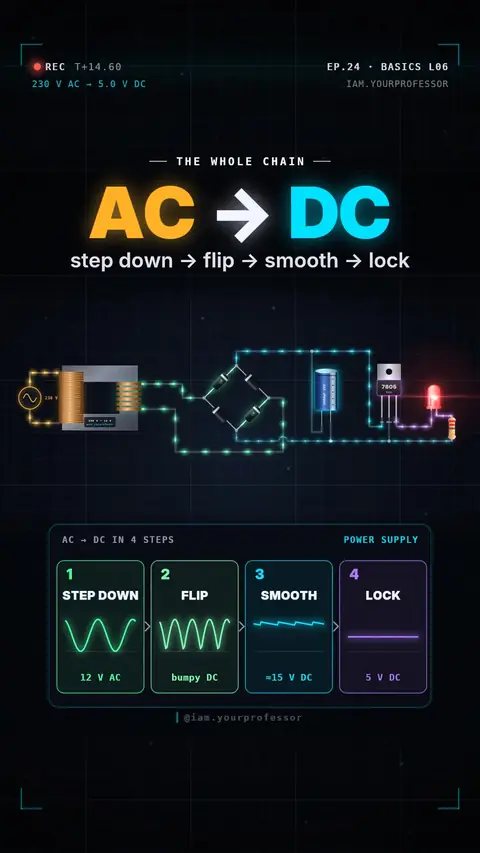
A diode lets current pass one way only (~0.7 V drop); a transformer, 4-diode bridge, capacitor and 7805 regulator turn 230 V AC into a steady 5 V DC.
Your wall gives AC. Your phone needs DC. Here's how a power supply turns one into the other ⚡
1. STEP DOWN: a transformer turns 230 V AC into 12 V AC (peaks of about 17 V).
2. FLIP: a diode lets current pass only ONE way. 4 diodes in a bridge flip every negative half UP, so you get bumpy DC (about 15.6 V, because 2 diodes each drop ~0.7 V).
3. SMOOTH: a big capacitor (1000 µF) charges at every bump and fills the gaps between them. Only about 1 V of ripple is left.
4. LOCK: a 7805 regulator takes that ~15 V and gives a dead-steady 5 V. Our LED is happy!
The AC is shown slowed down (real: 50 Hz). Phone chargers use a smaller, faster switch-mode version, but the idea is the same.
Related lessons
Get new lessons + early access to the full course
One email when new lessons drop. No spam, unsubscribe any time.
✓ You're on the list. Check your inbox to confirm.
By joining you agree to the privacy policy.