Capacitors Part 8 — why big capacitors can still shock you after unplugging
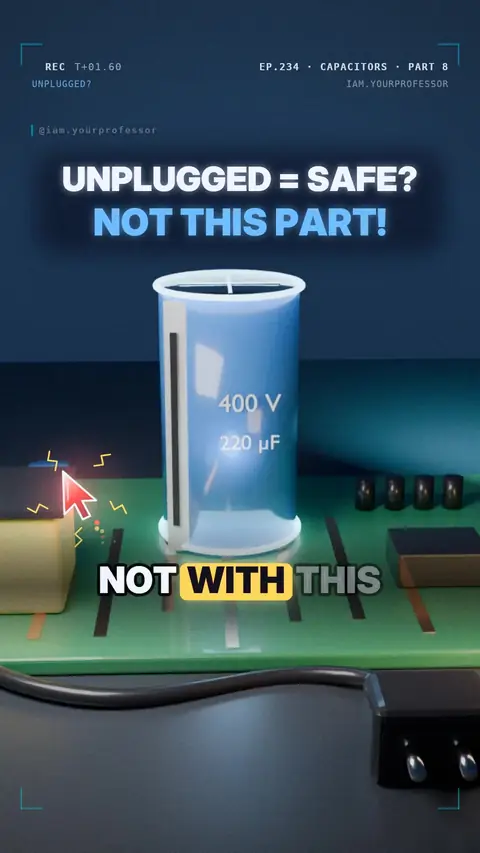
A capacitor keeps its charge after the power is off, so the big ones in TVs, chargers and microwaves can still shock you; a bleeder resistor or a proper discharge tool drains it safely.
Unplugged = safe? Not inside this box! ⚡🔌
🔋 Big capacitors keep their charge AFTER you unplug — nothing inside empties them fast.
⚠️ In TVs, PC power supplies and chargers that can be hundreds of volts (up to ≈ 400 V). A microwave oven's capacitor: ≈ 2,000 V — deadly.
🐢 Most circuits have a bleeder resistor that drains it slowly (seconds to minutes)… if it works. It can fail.
🤔 So how do technicians make it safe?
✅ They drain it through a resistor (with insulated leads) — never a screwdriver across the legs (BANG + damage).
🔎 Then they check ≈ 0 V with a multimeter on DC volts.
🚫 Beginners: don't open mains-powered gear at all.
Read the voiceover (transcript)
- Unplugged means safe? Not with this part!
- Big capacitors keep their charge after you unplug.
- A TV or charger can hold hundreds of volts!
- A bleeder resistor drains it slowly, if it works.
- The safe way?
- Drain it with a resistor, not a screwdriver!
- Then check zero volts with a meter.
- Next: which capacitor goes where? Follow for Part nine!
Related lessons
 EP.143 · Capacitor Series · 6Capacitor Series Part 6: Decoupling caps — the tiny capacitor beside every chip
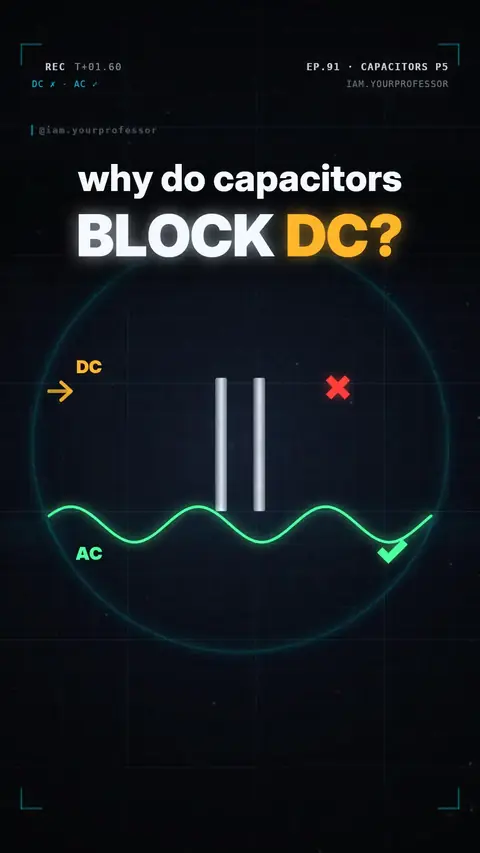 EP.91 · Capacitor Series · 5Why a capacitor blocks DC but passes AC
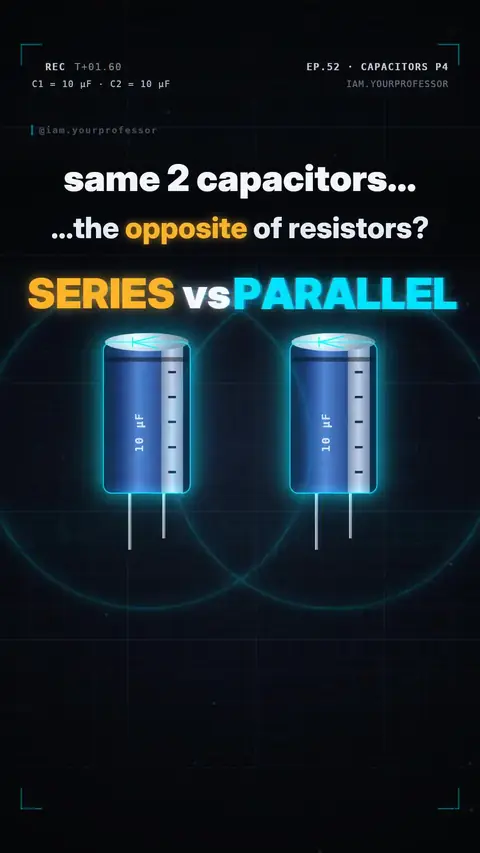 EP.52 · Capacitor Series · 4Capacitors in series vs parallel
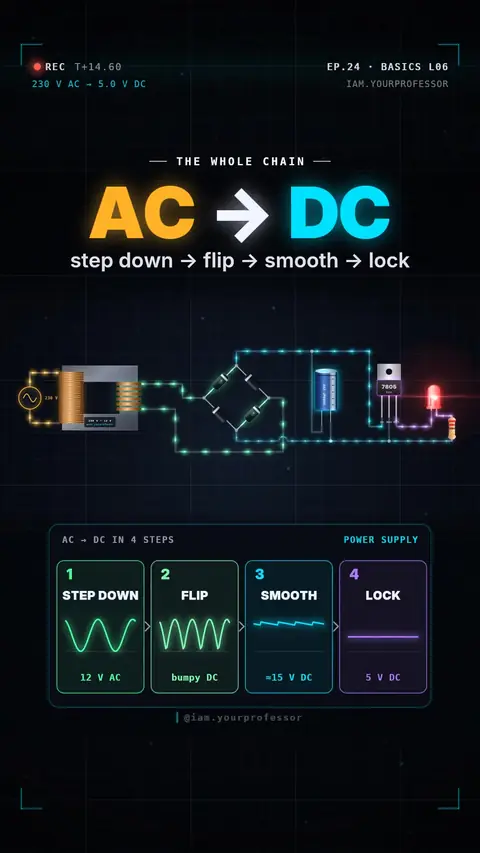 EP.24 · Electronics Basics · 6AC → DC: how a power supply makes DC
Get new lessons + early access to the full course
One email when new lessons drop. No spam, unsubscribe any time.
✓ You're on the list! We'll email you when new lessons drop.
By joining you agree to the privacy policy.