// FREE MINI-COURSE · 230V
Home Electrical
Home Wiring, Explained — Find faults, save power and stay safe with the wiring in your own home.
8 of 9 lessons out · next: Net metering: when your meter runs backwards
▶ Start lesson 1- 01
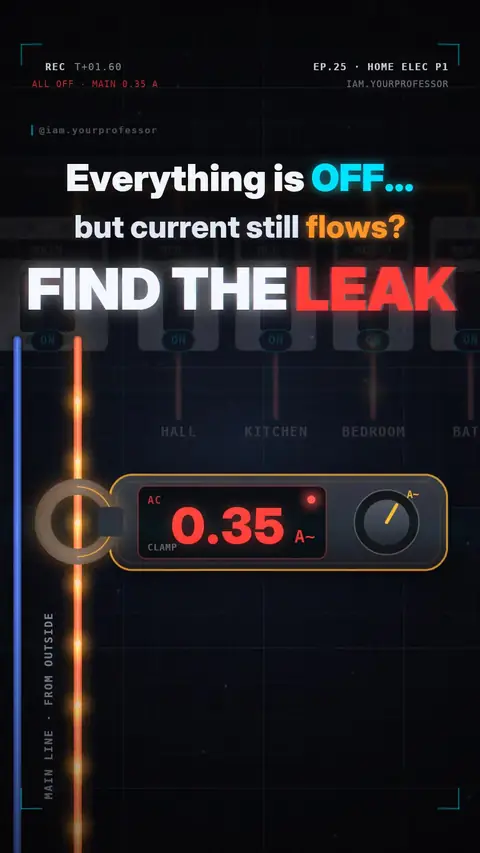 Find a hidden current leak with a clamp meterUse a clamp meter on the main phase, MCB by MCB and switch by switch, to find the exact wire that leaks current (and wastes units).
EP.25 · 20 s
Find a hidden current leak with a clamp meterUse a clamp meter on the main phase, MCB by MCB and switch by switch, to find the exact wire that leaks current (and wastes units).
EP.25 · 20 s - 02
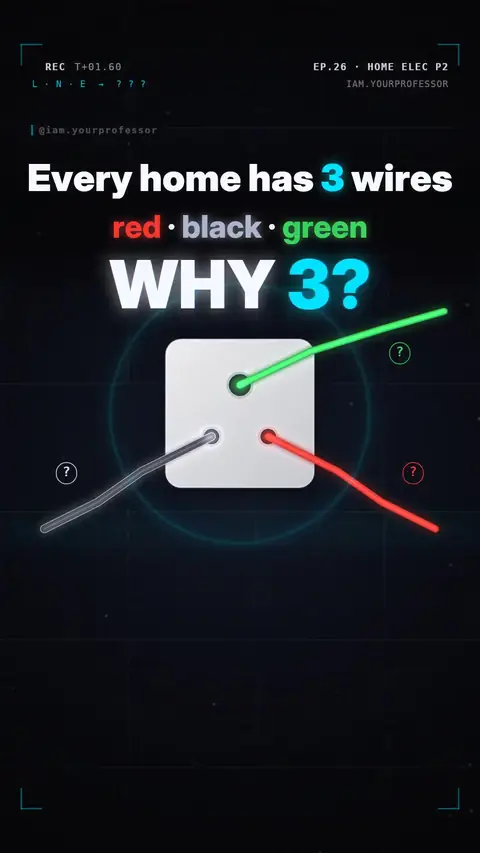 Red, black, green: the 3 wires in your homeFollow power from the plant (400 kV) down to 230 V: the transformer's star point makes the neutral, red phase pushes, black neutral returns, green earth saves you in a fault.
EP.26 · 20 s
Red, black, green: the 3 wires in your homeFollow power from the plant (400 kV) down to 230 V: the transformer's star point makes the neutral, red phase pushes, black neutral returns, green earth saves you in a fault.
EP.26 · 20 s - 03
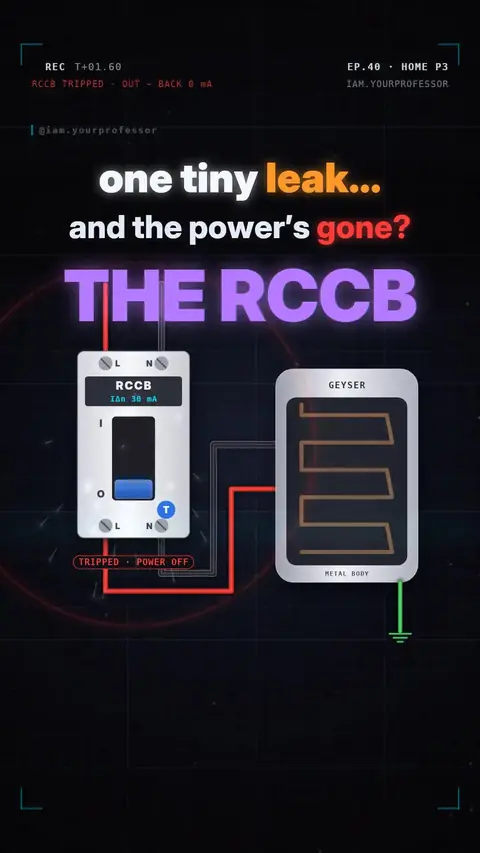 RCCB: the switch that trips on a leakHow an RCCB compares phase and neutral current and cuts the power by itself when 30 mA leaks to earth.
EP.40 · 24 s
RCCB: the switch that trips on a leakHow an RCCB compares phase and neutral current and cuts the power by itself when 30 mA leaks to earth.
EP.40 · 24 s - 04
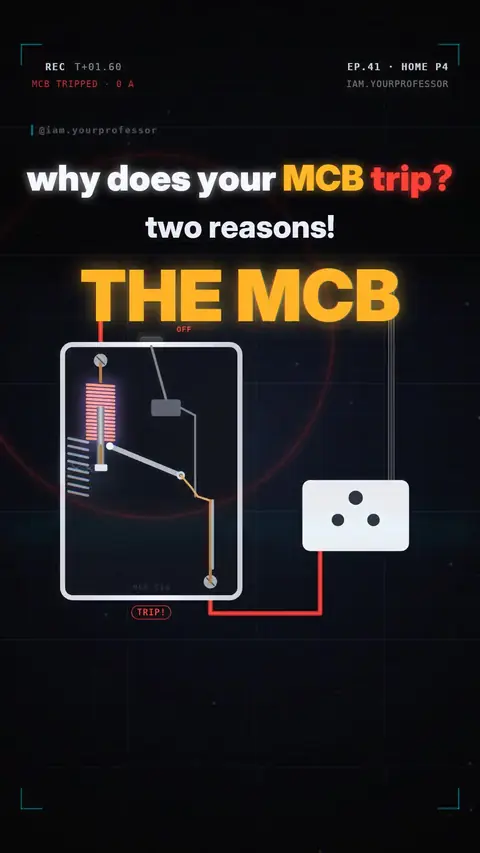 MCB: overload vs short circuitThe two trip parts inside an MCB (bimetal for overload, magnetic coil for a short) and how to pick 6 A / 16 A / 32 A.
EP.41 · 24 s
MCB: overload vs short circuitThe two trip parts inside an MCB (bimetal for overload, magnetic coil for a short) and how to pick 6 A / 16 A / 32 A.
EP.41 · 24 s - 05
 Earthing: how an earth pit worksWhat is inside an earth pit, why its resistance must be low, and how to test earthing safely.
EP.46 · 24 s
Earthing: how an earth pit worksWhat is inside an earth pit, why its resistance must be low, and how to test earthing safely.
EP.46 · 24 s - 06
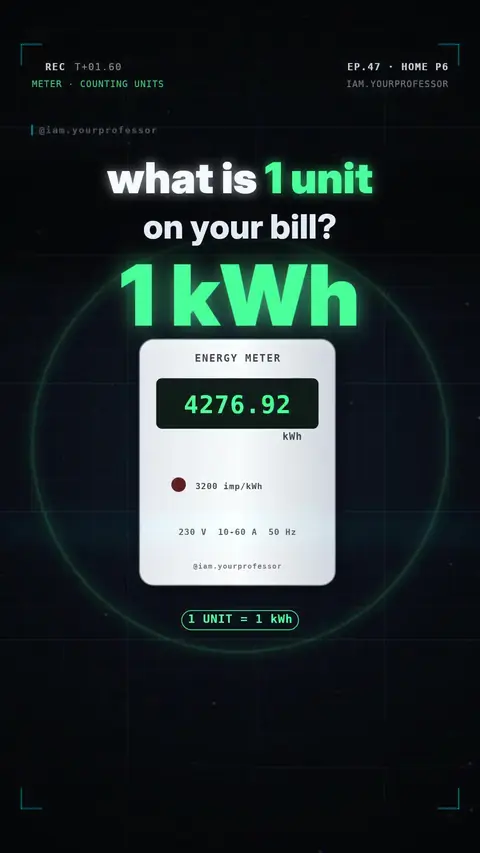 What is 1 unit of electricity? (kWh)1 unit = 1 kWh = 1000 W for 1 hour; hours per unit = 1000 ÷ watts (LED 100 h, geyser 30 min) and how to estimate a monthly bill.
EP.47 · 24 s
What is 1 unit of electricity? (kWh)1 unit = 1 kWh = 1000 W for 1 hour; hours per unit = 1000 ÷ watts (LED 100 h, geyser 30 min) and how to estimate a monthly bill.
EP.47 · 24 s - 07
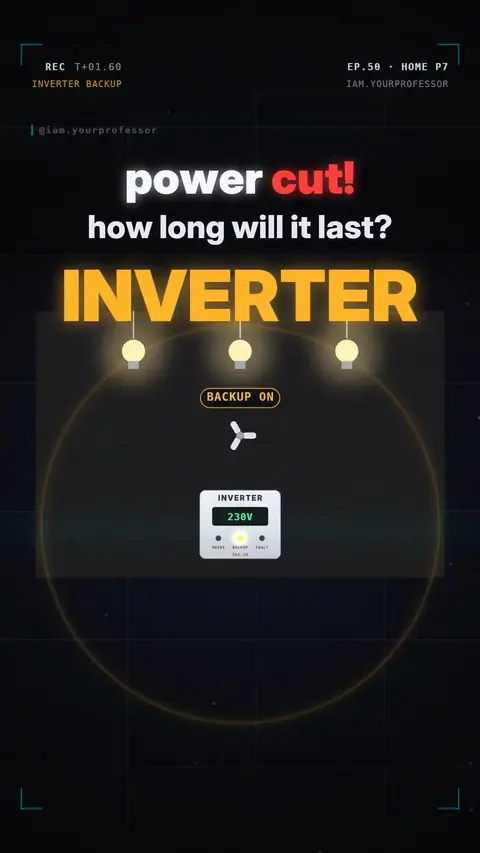 Inverter backup: how long will your battery last?Battery energy = volts × amp-hours (12 V × 150 Ah = 1800 Wh), divide by the load in watts (and inverter losses) to estimate backup hours.
EP.50 · 24 s
Inverter backup: how long will your battery last?Battery energy = volts × amp-hours (12 V × 150 Ah = 1800 Wh), divide by the load in watts (and inverter losses) to estimate backup hours.
EP.50 · 24 s - 08
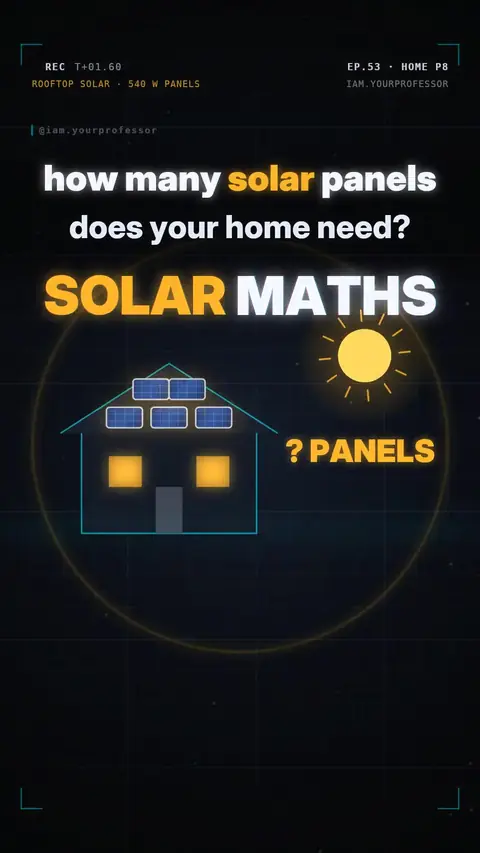 Solar panels: how many does your home need?Panel watts × sun hours = daily energy (a 540 W panel × ~4.5 h ≈ 2.4 units/day) and how to size panels from your monthly units.
EP.53 · 24 s
Solar panels: how many does your home need?Panel watts × sun hours = daily energy (a 540 W panel × ~4.5 h ≈ 2.4 units/day) and how to size panels from your monthly units.
EP.53 · 24 s - 09 COMING NEXTNet metering: when your meter runs backwardsHow a net meter counts units you import and export, so solar you don't use is sold to the grid and taken off your bill.
// NEWSLETTER · FREE
Get new lessons + early access to the full course
One email when new lessons drop. No spam, unsubscribe any time.
✓ You're on the list. Check your inbox to confirm.
By joining you agree to the privacy policy.