#define: name your pins
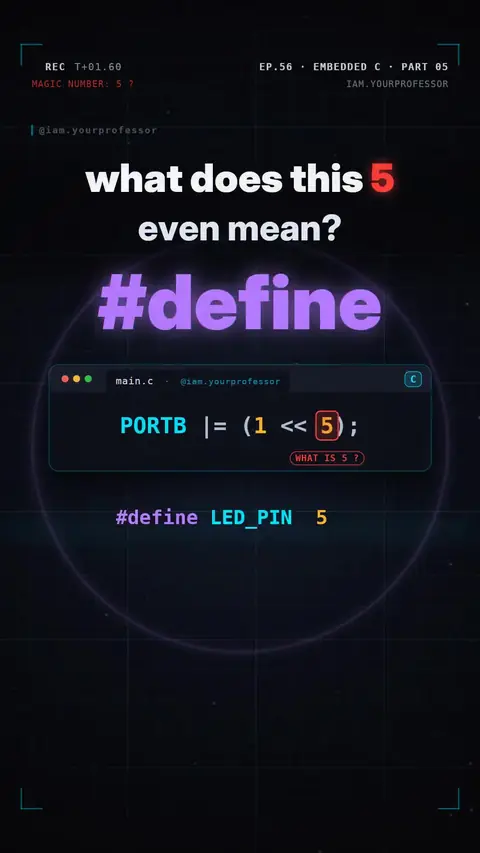
#define swaps names for numbers before compiling (LED_PIN 5), so code reads like English.
PORTB |= (1 << 5); … what does that 5 even mean? 🤔
1️⃣ NAME IT: #define LED_PIN 5, #define LED_DDR DDRB, #define LED_PORT PORTB. Now the code reads like English: LED_PORT |= (1 << LED_PIN); (Tip: #define has no ; at the end.)
2️⃣ FIND & REPLACE: before compiling, the preprocessor swaps every name for its value, so the compiler sees PORTB |= (1 << 5);. It's just text: it uses zero bytes of RAM. Run it and bit 5 (PB5 = D13) lights the L LED.
3️⃣ CHANGE ONE LINE: move the LED to D12? Change LED_PIN to 4 and every line that uses it follows (bit 4 = PB4 = D12).
📌 One name, one place to change it.
// EC L05 - #define: give numbers a name
#include <avr/io.h>

#define LED_PIN  5        // D13 = PB5
#define LED_DDR  DDRB
#define LED_PORT PORTB

int main(void) {
    LED_DDR  |= (1 << LED_PIN);
    LED_PORT |= (1 << LED_PIN);
    while (1) { }
}
Read the voiceover (transcript)
- What does this five even mean?
- Name it! Hash define LED pin five. Now your code reads like English!
- Before compiling, the preprocessor swaps every name for its value. It's just text: zero bytes of RAM!
- Move the LED? Change one line, and the whole program follows!
- One name, one place to change it!
- Next: what is a register? Follow for part six!
Related lessons

Get new lessons + early access to the full course
One email when new lessons drop. No spam, unsubscribe any time.
✓ You're on the list. Check your inbox to confirm.
By joining you agree to the privacy policy.